Every filmmaker works with the same tools, yet no two filmmakers produce the same work, and this difference is one of the abiding laws of creative life, which lends it its’ singular character. Cinema, though still arguably in its adolescence compared to older art forms such as literature and theatre, showed signs of rebellion long before that adolescence arrived. Rebellion was, in fact, the shadow the medium cast as it came into its own. Early filmmakers inherited the classical storytelling framework that Aristotle laid out for drama, and as they explored the medium's own capacities — montage above all — they discovered new ways of telling stories. Some artists began expressing their visions and aesthetic impulses through entirely different means, breaking from the mold and developing a signature that marked their work as unmistakably their own. Yet for decades, this departure remained a practice without a name - an artistic sensibility rather than an avowed critical position.
That sensibility did not acquire a name or a methodology until 1948, when the French critic Alexandre Astruc published his landmark essay "Naissance d'une nouvelle avant-garde : la caméra-stylo" in which he proposed that the camera could become an instrument of personal expression as fluid and personal as a writer's pen, and that a director was no less capable than a writer of articulating a fully formed intellectual vision through image alone. It was André Bazin and the critics of “Cahiers du Cinéma”, however, who consolidated the idea into a critical method, drawing a distinction between the craftsman-director who executes a script with technical competence and the auteur-director whose stylistic and intellectual signature recurs across a body of work, regardless of how varied its subjects may be.
A filmmaker's personal signature does not emerge from an institutional vacuum. The major studio, with its commercial logic and its calculations of audience appeal, frequently collides with the auteur's desire to impose a complete vision without compromise. Productive independence thus became a practical precondition - one that allows the auteur to exercise freedom of subject, rhythm, and form, removed from market pressures and beyond the economic classification that budgets impose. Independence, in this sense, became the ground on which auteur cinema grows.
The concept of auteur cinema was, in its original form, an act of rebellion against an entrenched cinematic tradition: the French "cinema of quality," which the filmmakers of the French New Wave regarded as illustrated literature rather than an autonomous visual art. This raises a question that demands an answer: what does "personal signature" mean when the director comes from a national context in which no established cinematic tradition has yet formed- one that could actually be rebelled against?
This is precisely the position of the Saudi director today. If the French New Wave was born out of a clearly defined refusal, those who make films in Saudi Arabia today inherit the full classical grammar of cinema without having, at the local level, an adversary embodied in a dominant cinematic current against which to position themselves. A commercial film industry has begun to take shape in the kingdom since the opening of cinemas in 2018, but it remains one that is still gradually asserting itself against the dominance of foreign productions at the box office, and has not yet crystallized into an aesthetically mature tradition in the sense that critical rebellion presupposes. The paradox is that the absence of an adversary in this form does not grant greater freedom- it removes the very standard against which "the new" is measured at all.
The beginnings go back to the 1970s with the pioneering director Abdullah Al-Muheisen, who laid the first foundation for cinematic art on Saudi soil. He was followed, in the early 2000s, by Haifaa Al-Mansour, the Qatif Friends collective, the Talashi group, and others. Yet as writer and critic Khalid Rabi explains in his book (Independent Cinema), the term "independent cinema" did not exist at the time- even though the concept, in its Western sense, applies retroactively to works such as (Barakah Meets Barakah, 2016) by director Mahmoud Sabbagh, who managed through his realist aesthetic to point Saudi cinema toward a new and different path. This was especially true after he founded Al-Housh for Artistic Production in Jeddah — the first Saudi company dedicated to independent film production — and pioneered the concept of Housh Cinema, an arthouse initiative that stands among the earliest independent cinema projects in the kingdom.
It is within this context that director Gigi Hozimah emerges as a distinctive figure in the independent cinematic landscape, one who pushes the question to its furthest limits. She does not merely inhabit the absence of a fully formed mainstream current- she actively adopts an artistic position that refuses any geographical anchoring from the outset. In numerous interviews, Hozimah has expressed her discomfort with critics' and festival programmers' insistence on tethering her work to her Saudi identity, viewing this insistence as a kind of constraint imposed upon the artist.
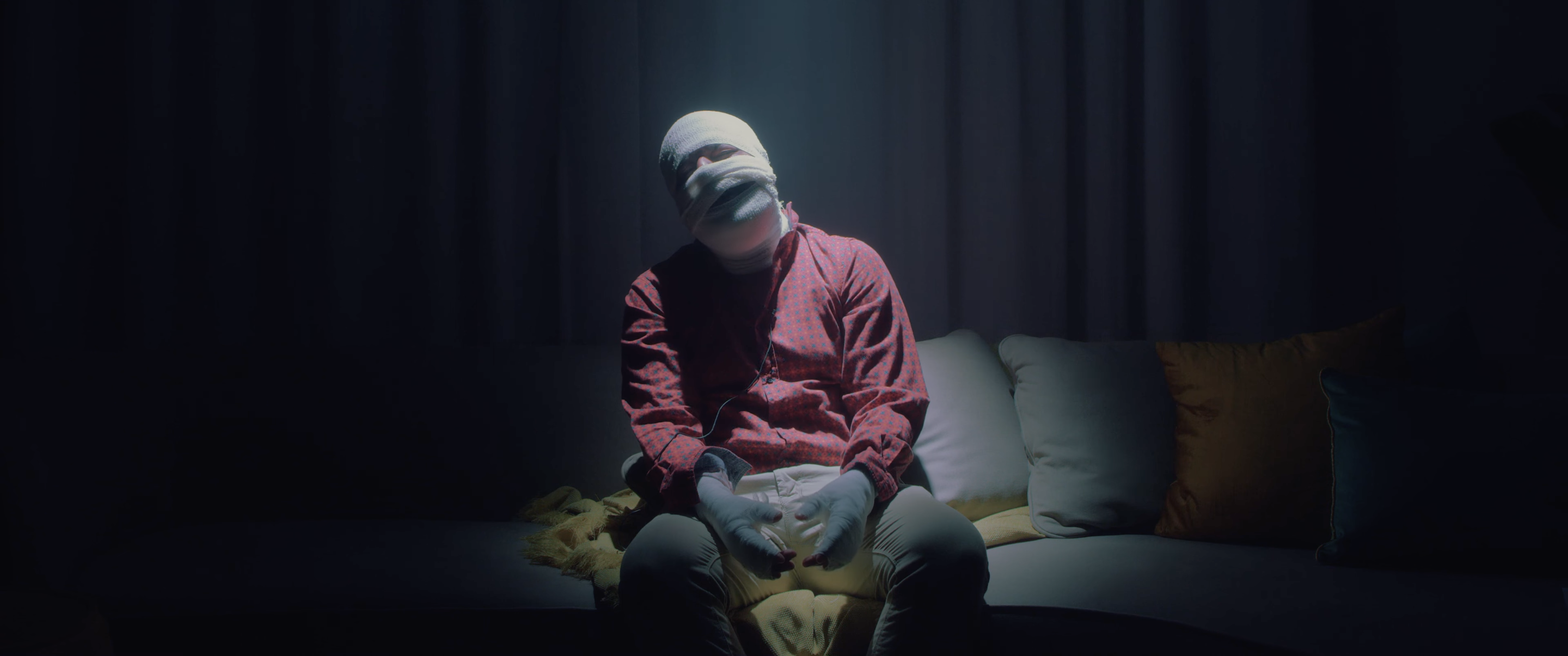
Hozimah grew up at a time when cinema had no presence in Saudi Arabia. She studied filmmaking in the United Kingdom and the United States, and went on to co-found her own production company in 2013, Look At The Wall Productions. Her body of work includes a number of short and feature-length films: (Window, 2009), (Blue Sweater, 2010), her feature debut (He Belongs to Us, 2017), (That Abandoned Place, 2021), and her most recent work, (And Then Comes Winter, 2026).
For Hozimah, the notion of independence is tied to the source of the impulse, not to the size of the budget. She holds that an independent film springs from personal experience and an inner compulsion to confront and make sense of experience, removed from market logic and the calculations of algorithms. She also observes that the word "independent" has been diluted in contemporary usage, co-opted by major studios for marketing purposes despite the fact that their productions do not in practice conform to the standards that define independence: financing and creation outside the dominant institutions of the industry, individual risk-taking, and complete freedom of form and content. She draws a conscious distinction between independence as a low-cost production label and independence as a fully developed intellectual stance- precisely the distinction that brings a filmmaker closer to the concept of the "auteur" as it evolved in the writings of the “Cahiers du Cinéma” critics. She also connects this concept to a therapeutic dimension: in her view, watching an honest film allows the viewer to confront hidden aspects of themselves.
Her cinema possesses recurring formal and thematic traits that place it firmly within the tradition of auteur cinema: a reliance on silence as an expressive tool equal to dialogue; a preference for slow rhythm as a means of granting each shot its "soul" by treating time as a living organism that breathes within the frame; a tendency to preserve ambiguity rather than offer direct explanation, rooted in her conviction that great cinema does not explain so much as it provokes feeling. To these formal qualities she adds recurring existential themes- fear, fragility, the search for meaning. Taken together, these stylistic and narrative characteristics make her films an expression of herself as a woman and as an individual.
Hozimah has not confined herself to articulating an artistic position within her films- her vision has extended into an institutional project of its own. On the ninth of July, Paris will host the inaugural edition of the Saudi Independent Cinema Salon, an annual cultural and artistic event she has launched with the aim of re-presenting cinema as a living art form and a space for reflection and dialogue, far from rapid consumption and commercial formats. The Salon's programme brings together a screening of her film (And Then Comes Winter) and a selection of short films by Saudi directors — some screening before a European audience for the first time — alongside artistic discussions with filmmakers and critics, and a visual arts exhibition. The project operates under the umbrella of her own production company, in partnership with ESRA, the French film school; Hayy Cinema, affiliated with the Hayy Jameel Foundation; and the Institut du Monde Arabe in France.
The Salon's true value lies not in its programme so much as in its symbolic position. As Hozimah herself describes it, it is a revival of the spirit of the cultural salon in a contemporary form- bridging the gap between the fleeting institutional screening and an intimate critical space capable of accumulating an audience and a sustained cinematic memory over time. It is, moreover, the first initiative of its kind in the history of Saudi cinema to be led by an independent female director on the strength of her own vision, outside any official institutional framework.
Independent cinema, for Gigi Hozimah, is the foundation from which everything else begins- and this is a position one can readily affirm when looking at what an artist like Charlie Chaplin did when he found himself constrained by the templates of the major studios. He did not limit himself to artistic protest; he co-founded United Artists with fellow directors and actors to secure for himself and his collaborators the freedom to produce and distribute their work outside the studio's authority. Chaplin understood, at the time, that a "personal signature" is not in itself sufficient- the auteur sometimes needs to build the space in which that signature can be protected.
This is precisely what the Saudi scene is now replicating on a broader scale: from Mahmoud Sabbagh, who did not stop at directing his films but founded Housh Cinema as a home for work of a different register, to Gigi Hozimah, who has gone beyond rejecting ready-made identity in her films to taking a new step up in the ascent of Saudi independent cinema- through a Salon project that seeks to embrace the voices of Saudi auteur filmmakers and provide them with a platform from which to present their singular vision of the world.