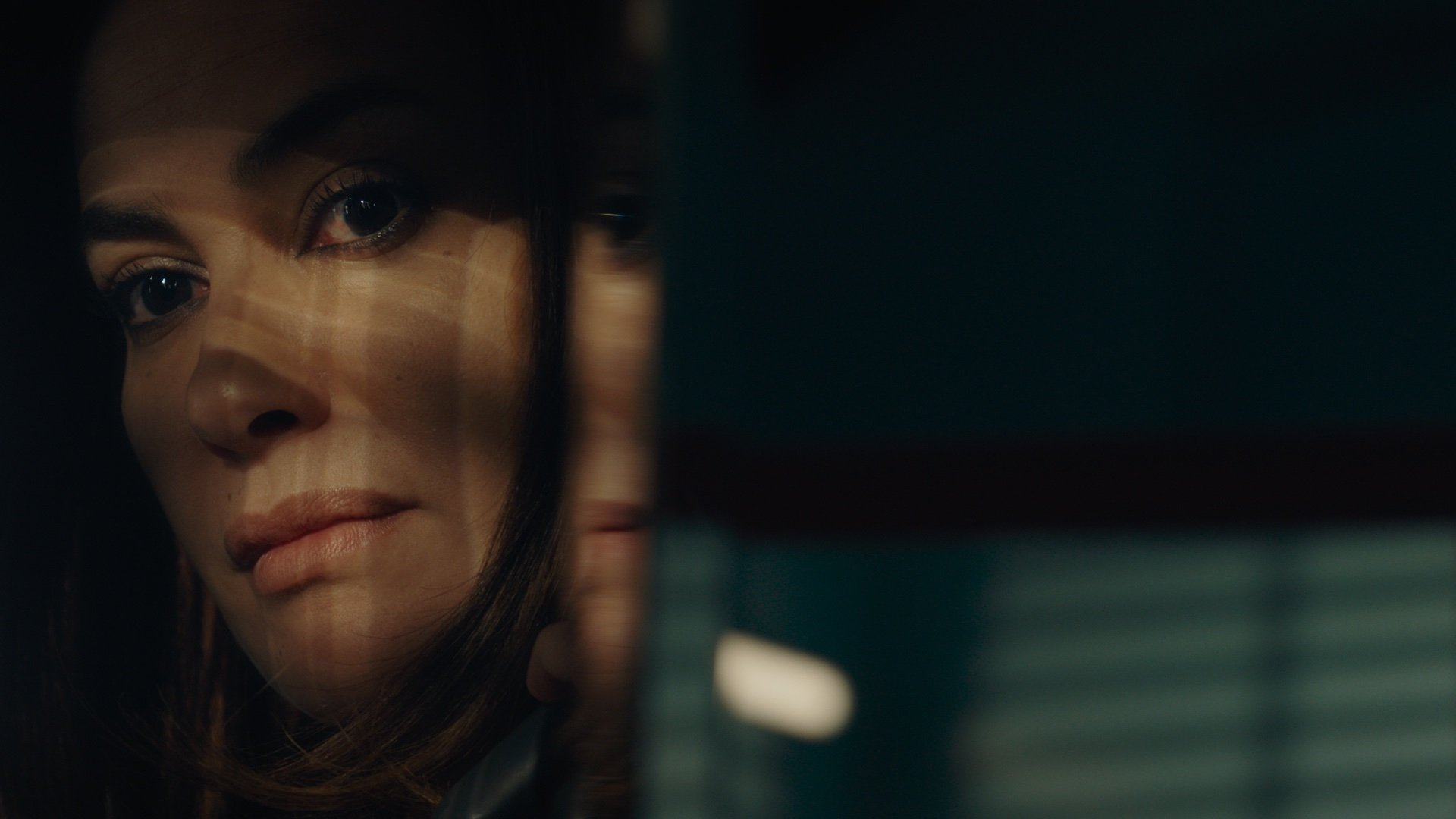
Kaouther Ben Hania's movie (Four Daughters, 2023) «بنات ألفة» has garnered great interest since its release at the recent Cannes Film Festival, which brought Tunisian cinema back to the competitive field after many decades of its absence. However, this specific point is not the focus of this article, as it has been extensively analyzed and interpreted on numerous Arab and Western platforms.
Four Daughters revolves around the issue of girls traveling to the center of tension, through which the director addresses the subject of terrorism and its various problems. This movie follows a series of Tunisian movies that portray the suffering of the Tunisian people across different segments and categories from the phenomenon of terrorism.
The movie (Fatwa, 2018) «فتوى», directed by Mahmoud Ben Mahmoud, tells the story of a Tunisian family suffering after the death of their son, who became involved with radical Islamist groups. These groups issued a fatwa against his mother, a political figure who had published a book on religious extremism and terrorism in Tunisia, which led to her son falling into the hands of militants. In the film, Marwan is a young Tunisian with a passion for portraiture. However, his association with the militant group kept him from pursuing his artistic talents. While the group couldn't carry out the fatwa against his mother, a political and human rights activist, they did manage to assassinate her husband as he was trying to leave the country.
Several movies have addressed the issue of young people whose experiences at certain Islamic centers led them to travel to conflict zones or carry out terrorist operations within their own countries. One such film is (The Flower of Aleppo, 2016) «زهرة حلب» directed by Ridha Behi. In this movie, a mother, desperate to save her young son who has gone to Syria for jihad, travels to Raqqa to find him. Her ordeal takes a tragic turn when she is raped by a jihadist leader and later killed by her son just as she is about to meet him.
The tragic story experienced by Salma in The Flower of Aleppo mirrors that of Ibrahim Al-Nador in Fatwa. However, this tragic element is absent in Ghazi Zaghbani’s film (Al Harba, 2020) «الهربة». Instead, Al Harba presents a caricature of religious extremists and jihadists. In the movie, a terrorist, while fleeing from the police, ends up hiding in the house of a prostitute named Nargis, finding safety under her bed to avoid capture and imprisonment.
The distinctive feature of these three films lies in the fact that they do not employ the framework of documentary cinema but have succeeded in presenting the problem of terrorism to Tunisian and international audiences through narrative drama, stimulating public debate.
In his definition of realistic cinema, André Bazin argues that it is not a restoration of reality but the creation of a new reality according to aesthetic criteria that distance the movie from direct documentation.
In these films, despite their different directors' approaches to the same issue, they have formed a common framework for understanding and portraying "terrorism," based primarily on a structure of conflict: the conflict of places, identities, cultures, and civilizations; a conflict across time; and a conflict between individuals and their visions, simulating the crisis of a deep societal divide.
Extremism penetrates places where we see no doors or windows; houses are ruled by darkness; intense debates between characters escalate. The films are built on a complex structure of intersections that reach the point of rupture and gaps into which characters fall into the darkness of conflict. The voices of characters struggle within the building in Fatwa; the principles of the extremist collapse under Nargis’s bed in Al Harba; while in The Flower of Aleppo, the heroine and her husband search in areas where their son was isolated to learn the principles of jihad according to the concepts of the terrorist organization. The mosque, secured by the Islamic group to teach jihadist lessons, plays a central role in this search.
The settings in these films highlight the subject of conflict and are divided into two distinct parts without overlap. This division is evident in the titles and themes of the films. On one side, we have the architecture of the local town, cinema halls, taverns, wedding venues, traditional Tunisian houses, the graves of the bey overlooking the sea in Fatwa, and street corners. These places represent Tunisian identity, characterized by solidarity and the sharing of feelings and emotions in daily life. On the other side, we have the mosque, the mountains, media centers, jihadist homes, and the Syrian desert. These locations have transcended their original roles as places of residence or sites for religious practice. They reveal a deeper conflict between various dichotomies: this versus that, here versus there, inside versus outside, self versus other, group versus people, obscurantists versus modernists. The conflict starts with differing visions and ideas and ultimately culminates in physical violence.
The conflict of places in these Tunisian films is intertwined with a conflict of names, representing a deeper clash of identities. On one side, there are names like Salma, Nargis, Murad, Marwan, Fatima, Ibrahim Al-Nador, and Latifa, while on the other side, there are names like Abu Souf, Abu Hamza, Abu Al-Walid, Al-Amir Nizar, and Jundullah. This contrast gives rise to what Jean-Louis Comolli refers to as a "visual shock," where death, whether by firing squad or slaughter, becomes a recurring motif, symbolizing what Comolli describes as "the image of execution" in his book ISIS: Cinema and Society.
Yet, the question remains: When will cinema worldwide surpass the power of depicting scenes that ISIS has mastered, creating a sense of "diffusion" that spreads its message more effectively than even Hollywood movies?