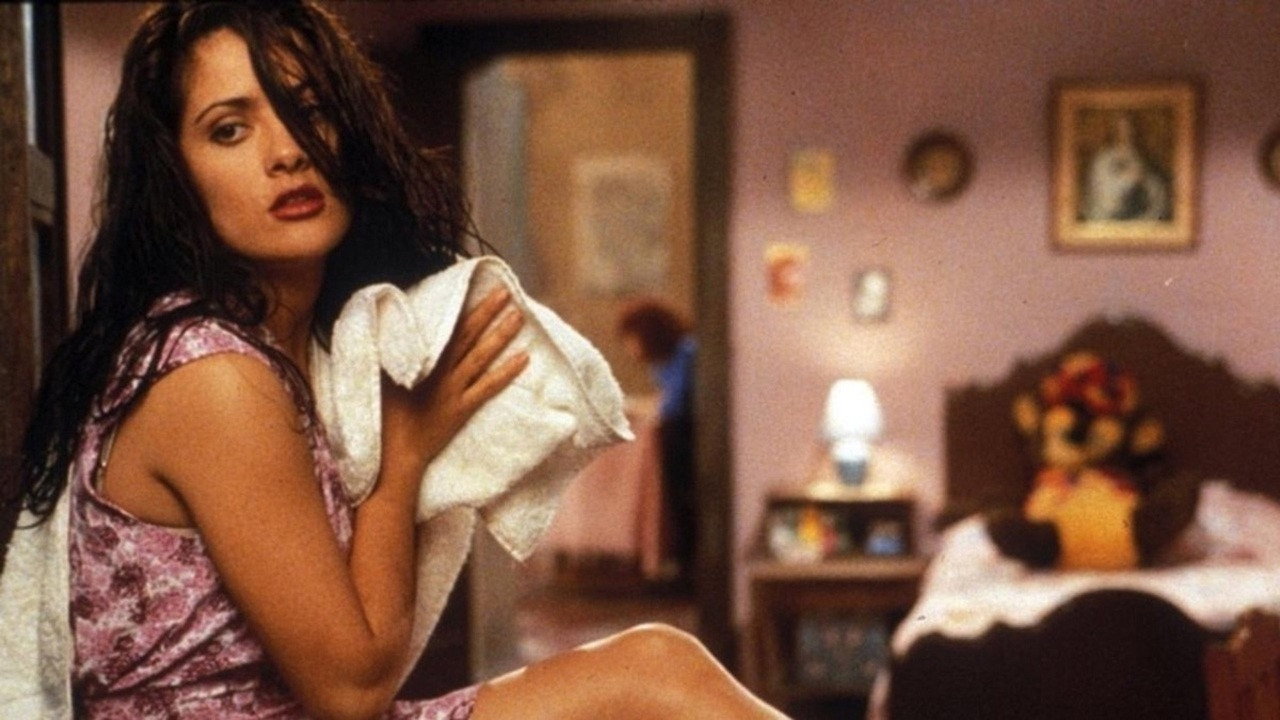
In the mid-1990s, a group of exceptional Mexican artists led by director Jorge Fons and Salma Hayek lined up readily to accept every Ariel award their film Midaq Alley (El callejón de los milagros, 1995) was nominated for. Yes, that novel was written and published by Naguib Mahfouz nearly fifty years before the release of this film. It was not the only gift that Oriental literature brought to the cinema of the southern part of North America, as a year earlier, Mexican director Arturo Ripstein had a successful experience with his film Principio y Fin (The Beginning and the End), also inspired by another novel by Naguib Mahfouz with the same name. The film also received critical acclaim and prestigious nominations, but, unfortunately, it did not make it to the final list of Oscar nominations despite representing Mexico at the festival. The same fate befell the film El Callejón de los Milagros, which achieved even greater success.
I had envisioned starting my speech in tribute to the Arabic novel this way, and what a splendid introduction it is for a speech commemorating the remarkable achievements of Naguib Mahfouz’s novels! It is truly remarkable how two Mexican directors have recognized the resonance between contemporary Mexican stories and the exquisitely crafted writings of an exceptional Egyptian author like Naguib Mahfouz. His novels, along with the contributions of numerous other writers, have undeniably left an indelible and unforgettable imprint on the Arab film heritage.
If I were to begin by discussing Naguib and the magnificent embodiment of his novel in cinema, it would only be enhanced by transitioning to those who brought the Arab literary image closer to portraying the stories of the less fortunate. I am referring to Abdel Rahman El-Sharqawi, the poet who emphasized the profound value of words. His proximity to the Egyptian farmer gave birth to the epic (The Earth), which Youssef Chahine transformed into the greatest film in the history of Arab cinema. It also gave us Aziz Street in (The Back Streets), that alleyway that echoed the thoughts and interactions of Egyptians with their reality after the 1935 uprising. In my opinion, this work was poorly presented in its adaptation for cinema and television, despite the remarkable performances of both Mahmoud El-Meligy and Gamal Soliman in portraying the patriotic officer who refused to let Egyptians fall at the hands of their own countrymen in their struggle against the English.
Arabic novels didn’t settle for portraying these dimensions of class disparity alone. Still, they went beyond to address more sensitive issues, such as the sufferings endured by women from various forms of assault. This theme is almost inseparable from the novels of Youssef Idris, many of which have been adapted into films. It becomes evident in one of the most significant and daring Egyptian films in terms of subject matter: (The Sin ) «الحرام»; this film gained substantial critical acclaim and was even among the contenders for the Golden Palm at the Cannes Film Festival, the same year when Richard Lester won for his film (The Knack... and How to Get It).
Directed by the king of filmmaking, Henry Barakat, and starring the iconic Arab actress Faten Hamama, (The Sin) tells the story of a married woman who falls victim to rape because of her poverity and her husbands disabiality. This traumatic experience forces her to conceal her pregnancy, leading her to endure a breathtaking tragedy that culminates in her death during childbirth. As mentioned, Youssef Idris didn’t limit his exploration of these distressing juxtapositions surrounding women and gender to this film alone. It becomes even more apparent in works such as (An Incident of Honor) «حادثة شرف», (The Call) «النداهة»,(No Time for Love) «لا وقت للحب», and (The City Abyss) «قاع المدينة».
Looking back in time, even preceding the era of these three artists, when examining the impact of the Arabic novel on the film industry, one would encounter the first instance of a novel being adapted into a film. Perhaps it was (The Nightingale’s Prayer) «دعاء الكروان» by Taha Hussein, under the direction of the renowned filmmaker who consistently takes the lead in Egyptian cinema. The film explores a theme akin to those explored in Yusuf Idris’s works, highlighting the tragedies endured by violated women rather than focusing on the perpetrators themselves. This becomes evident when Amna and Hanadi, coerced by their maternal uncle, are compelled to leave their village in order to escape the rumors surrounding their father’s lifelong acts of assault. Subsequently, an internal conflict arises within Amna as she seeks vengeance against the engineer who raped her sister, Hanadi, during her employment as a maid in his household. This situation also ignites a sinister desire within her vile uncle to murder Amna, while her own emotions begin to stir towards the very same engineer. I don’t believe that Taha Hussein, along with the adaptation by Hassan Jawhar and Henry Barakat, introduced a particularly innovative twist in terms of the characters’ suffering in making their own choices. Nevertheless, it undoubtedly stands as a pivotal novel that ingrains awareness of the issue of violence against women and the burdensome cultural constraints, such as customs and traditions, unjustly imposed upon them.
Perhaps there is a novelist who preceded Taha Hussein in cinematic representation, and that is Ihsan Abdel Quddous, hailing from a family that laid the foundations of intellectual culture in Egypt. His mother, Rose al-Youssef, was a Lebanese actress who transitioned from the theater stage to the field of journalism. She established one of the most important and prestigious artistic magazines, Rose al-Youssef, which has been in publication since the 1920s until today. As for his father, it is Mohamed Abdel Quddous, a pioneering figure in Egyptian cinema. We are faced with a novelist who grew up in a household enriched with art, and it is through this love for the arts that Ehsan infused his novels, which he subsequently transformed into films. He began with works such as «الوسادة الخالية» (The Empty Pillow), «لا أنام» (I Can’t Sleep), and «أنا حرة» (I Am Free), and went on to create a total of seventy films based on his writings. I believe that discussing Ihsan Abdel Quddous and his works would require a dedicated article of its own.
The progress of Arabic novels adapted by cinema was not only limited to romantic stories but extended beyond that to address sensitive political issues. One of the most prominent examples is the work of Youssef Al-Qa'id in his films «المواطن مصري» (The Egyptian Citizen) and (The President’s Visit) «زيارة السيد الرئيس». If we look beyond Egypt, politics becomes even more evident, which can be attributed to the literary movement in Egypt influenced by Russian literature in the 1930s. This influenced Egyptian literature to address political issues within social contexts, unlike the Arab literature that mainly presented political memoirs or satirical plays. This is evident in the works of Mohamed Choukri in (For Bread Alone) «الخبز الحافي», Mohamed El-Maghout in his duology with Doreid Lahham in (The Report) «التقرير فيلم» and «الحدود» (The Borders), as well as the Moroccan film (The Black Room) «الغرفة السوداء», inspired by the story of Jawad Madiush and his experiences in prisons during the 1970s, along with what Ghassan Kanafani wrote based on the Palestinian cause and the suffering faced by Palestinians after the Nakba. All of this was addressed more clearly and directly than what Egyptian novels presented in cinema.
Speaking of Russian literature and its influence on Egyptian novels, Dostoevsky was also present in the Arab scene alongside Egyptian writers. Crime and Punishment was adapted in two different films: (Crime and Punishment) «الجريمة والعقاب» by Ibrahim Amara and (Sonya and the Madman) «سونيا والمجنون», by Hussam El-Din Mustafa, who also directed the masterpiece (The Hostile Brothers) «الإخوة الأعداء», based on Dostoevsky’s The Brothers Karamazov. Leo Tolstoy’s novel Anna Karenina was adapted into the film (The River of Love) «نهر الحب» by Ezz El-Din Zoulficar, starring Faten Hamama and Omar Sharif.
Egyptian cinema did not limit itself to Russian literature alone but also adapted French literature, such as Emile Zola’s novel Therese Raquin in the film (The Beast Inside Man) «الوحش داخل الإنسان» and Albert Camus’ play Misunderstanding in the film (The Unknown) «المجهول», The suffering of Jean Valjean was depicted in the film (The Miserables) «البؤساء فيلم», based on Victor Hugo’s work, as well as Eugene O’Neill’s play Desire Under the Elms in the Egyptian film (Sleepless Eyes) «عيون لا تنام».
Coincidently,Sleepless Eyes the masterpiece of crafted by Raafat Al-Mihi – which was released in 1981 – takes us to the year when Ibrahim Aslan finished writing his finest novel, The Heron (مالك الحزين), which was turned ten years later by the great director Daoud Abdel Sayed into one of the most outstanding films in Mahmoud Abdulaziz’s filmography,(The Kit Kat) «الكيت كات», which features the most beloved characters of Egyptian cinema to my heart, which is the character of Sheikh Husni, the man who lightheartedly overcomes his loneliness, along with other various characters who represent the Egyptian people in the context and environment in which the novel is set.
When we talk about the inclusiveness of Egyptian novels in portraying the Egyptian citizen, we cannot overlook (The Yacoubian Building) «عمارة يعقوبيان» and the outstanding performance by Adel Imam, overcoming the decline that affected the actor’s performance in previous films like (A Groom from a Security Entity) «عريس من جهة أمنية» and (The Danish Experiment) «التجربة الدنماركية», It reminded us of something that cannot be ignored: that this man is truly the ‘Za’eem,’ as he is popularly called.
As a continuation of the decline that occurs in the scene and its stars from time to time, it is undeniable that we are currently living in a dim and lackluster era in Egyptian cinema. There are only a few notable films, perhaps five or six, that stand out. It is remarkable, my dear, that most of them are adaptations of novels, such as Hepta «هيبتا», (Turab Almas) «تراب ألماس», and (The Blue Elephant) «الفيل الأزرق», which received critical acclaim and popular enthusiasm, a rarity among the majority of films in this decade.
Before concluding this article, we must not overlook the writings of the late Youssef El-Sebai , the martyred minister in Cyprus. What he wrote should also occupy our discussion. The memory of Egyptian cinema encapsulated some of its greatest achievements, what the man wrote and excelled in, such as (The Land of Hypocrisy) «أرض النفاق», (Um Ratiba) «أم رتيبة», (Al-Saqa Died) «السقا مات», (Among the Ruins) «بين الأطلال», (Remember Me) «اذكريني» and (Nadia) «نادية».
Lastly, coming full circle to Naguib Mahfouz and his contributions to cinema, adding to the literary heritage with his realistic stories. He pioneered the exploration of all the topics mentioned in cinema and more. He had the lion’s share in the best one hundred films in Egyptian cinema, with around twenty films attributed solely to him. Glory be to the Creator who bestowed upon him such talents, which enabled him to approach even the most challenging subjects in the smoothest and most comprehensible ways for cinema to grasp and comprehend. May God’s blessings be upon Naguib and his remarkable productions.