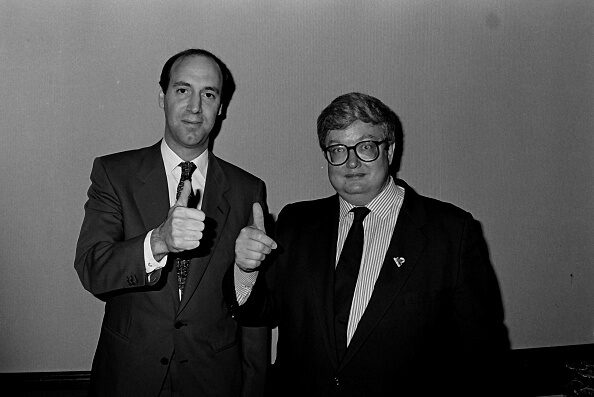
The film critic faces multiple crises, beginning with the fundamental understanding of the nature of their work. According to academic definitions, Abdulaziz Alwn, for instance, states in his book Figures of Artistic Criticism in History that the critic is an individual who “describes the artistic work, defines its characteristics, introduces the audience to the world of the work in order to appreciate it, reveals its aesthetic dimensions, assists the artist in their future development, determines the position of the artistic work in relation to the artist’s overall production and the history of art within the social and creative frameworks in which the work emerges, and defines the value of this work for the advancement of both local and global artistic movements.”
Accordingly, the film critic fulfills several influential roles within the artistic movement through their profession. These roles include communicating with the audience by attempting to interpret the film and decode its symbols and components; engaging with society by situating the work within the context of artistic production and historical reception; and establishing dialogue and cooperation with filmmakers themselves, offering guidance that may contribute to the development of their subsequent works.
Art in general, and cinema in particular, constitutes a creative and communicative process grounded in an interactive relationship between the creator and the recipient. This process is composed of three essential elements: the sender, the message or artistic work, and the recipient.
Within this process, the critic occupies a vital position and contributes to its completion. The critic acts as an intermediary who stands on equal footing with the audience during the viewing experience and, through their writings, serves simultaneously as an aid to both the audience and the creator.
This framework clarifies the role of the critic and demonstrates that there is no inherent antagonism between the critic and the creator. On the contrary, the critic is expected to contribute to the pursuit of artistic excellence. This, however, is contingent upon the critic maintaining impartiality, objectivity, and neutrality, without yielding to flattery or personal interests. Consequently, criticism, like any profession, may be subject to individual deviations. Yet criticism itself has never been an adversary of artists or audiences, despite how it is sometimes portrayed.
The Critic as the Enemy of the Creator
The perception of the critic as an enemy of the creator is addressed by Dr. Fouad Zakaria in his book Critical Opinions on Intellectual and Cultural Issues. He notes that “objective criticism is an essential component of intellectual life in societies with established scientific traditions. However, in our society, on a personal level, it is no less dangerous than declaring war between nations. It is often perceived as hatred and as evidence of hostility.”
Reexamining the origins of this perception reveals that not everyone who expresses an opinion can be considered a critic. Frequently, one encounters writings saturated with insults, biases, and ideological positions that lack a fundamental understanding of the essence of criticism. Such practices contribute to a distorted image of the importance and function of criticism within the artistic process.
Artistic criticism differs fundamentally from general criticism, as producing a comprehensive critical study constitutes a creative act governed by one or more methodological approaches. Evaluating artistic works from a non-artistic standpoint often results in significant confusion, stemming primarily from a misunderstanding of the nature of art itself.
An artistic work is, at its core, a dramatic hypothesis shaped by circumstances and details originating from its creators. The critic’s role is to perceive it artistically and engage with it through analytical and aesthetic interpretation- nothing more.
Throughout the history of cinema, numerous conflicts have arisen between creators and critics. These conflicts have manifested in televised discussions and in articles published in artistic magazines and newspapers, frequently framing the critic as a hostile opponent. With the progression of time and technological tools, these disputes have migrated to social media platforms, where they are displayed openly. Moreover, they are no longer confined to verbal disagreements but have extended to affect anyone who expresses an opinion, whether a professional critic or an ordinary audience member.
The Committee in the Face of Criticism
Technological advancement, intellectual development, and cultural transformation have reshaped the dynamics of the contemporary era. Among these changes, social networking platforms have become an integral part of daily life and a significant arena for film criticism. Today, nearly every film critic maintains a personal page or official account through which opinions are published, whether on specialized websites or through independent platforms, with the aim of reaching broader audiences.
Recently, a phenomenon known as “online committees” has emerged. These committees consist of individuals who operate multiple accounts- both authentic and fake- through which they promote and circulate posts across various pages under different identities. This practice has produced a distinct form of critical discourse prevalent on numerous websites, including paid promotional pages designed to market specific films. While not entirely new, this mechanism represents a renewed strategy aligned with the evolving conditions of the digital age.
A notable example can be observed in the reception of the recent film by Egyptian actor Mohamed Henedy, (Marei El Brimo, 2023) «مرعي البريمو». The film received substantial critical analysis highlighting deficiencies in visual composition, writing, and acting performance. In contrast, a large number of repetitive posts appeared on the aforementioned pages, emphasizing the film’s quality, comedic appeal, and directing and writing achievements. Pages such as Gramaphone. Views. It’s My World, among others, enjoy considerable popularity. The objective of this coordinated effort is to present an image that contradicts prevailing critical assessments, thereby undermining them while promoting the film and attracting audiences.
The matter does not end there. These online committees have also engaged in shutting down critics’ pages and deleting articles written by critics whose views are perceived as a genuine threat to a film’s commercial success.
This phenomenon reveals a flawed understanding among some creators regarding the role of criticism. There appears to be a lack of awareness of criticism’s importance in fostering artistic development. Instead, a confrontational approach is often adopted, extending to the complete erasure of dissenting critical perspectives.
To illustrate this, a personal incident may be cited. An article was published addressing the performance of the young actor Issam El Sakka, only to be swiftly removed under the pretext of using the actor’s photograph without permission. This example highlights the mechanisms through which these committees operate, often without a clear objective or tangible benefit. Their actions are governed by an electronic system driven by the algorithms of social media platforms such as Facebook.
Such practices lead to numerous consequences and vary according to individual critics’ circumstances. Ultimately, however, they contribute to the gradual disappearance of serious critics who engage in careful interpretation and in-depth analysis. In their place, there emerges an abundance of recycled opinions, which may hold value if they genuinely reflect honest and unbiased viewpoints. Nevertheless, the elegance and indispensable significance of the critic’s role remain- particularly when criticism is articulated through a structured methodology supported by evidence and grounded in a purely artistic perspective that incorporates diverse critical approaches.
Efforts to silence the critic’s voice disrupt the balance of the entire cinematic industry by depriving it of one of its essential pillars in the creative process. Certain individuals and their committees persist in intimidating critics, suppressing their voices, and erasing their influence.