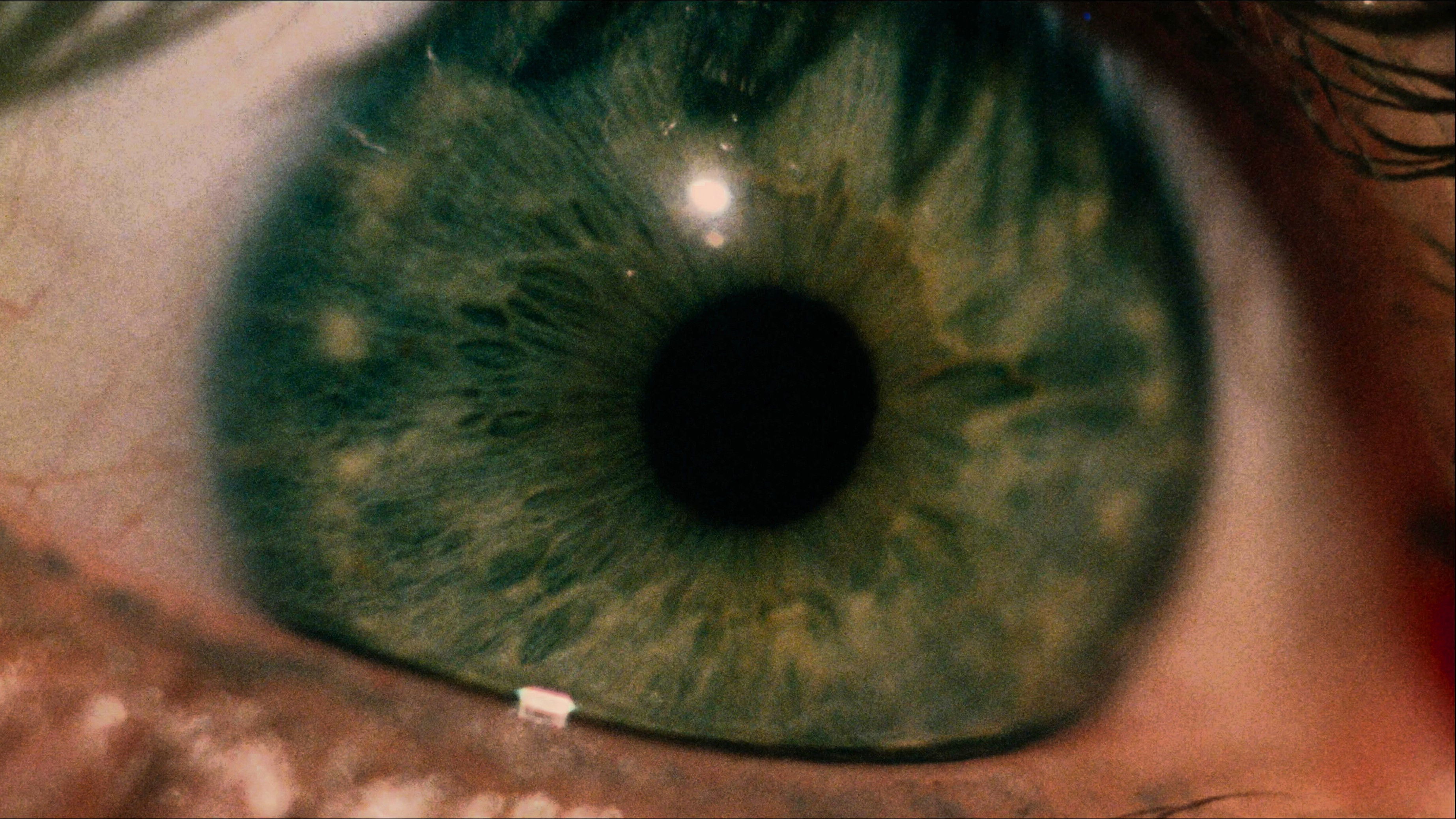
One of the most intriguing concepts is Freud's concept of the 'Uncanny,' rooted in two contradictory terms that create a psychological experience. This experience can manifest in abstract concepts or be embodied in images, places, and entities such as ghosts, vampires, jinn, and omens. These two terms originate from the German language, leading to various translations and explanations, even by Freud himself, in an attempt to describe this contradictory experience. The first word is 'Heimlich,' which simply means familiar and known, while its opposite, 'Unheimlich,' means unfamiliar, unknown, and secret. Their combination into a single concept implies the hidden that is known, which can also be shocking because the self recognizes, knows, or understands it. This results in a psychological state best translated as a sense of 'strangeness' that evokes suspicion and fear, but in an unnatural way, closest to a supernatural feeling.
However, through the readings of horror philosophy critic David Punter on this concept as a cinematic experience in horror, it is not solely about recognizing the self in the other. It has several representations, such as the feeling of déjà vu—the sensation that what is happening has happened 'before' to the same self, as if there is a buried psychological state resulting from 'what happened.' The sense of strangeness may also seep into solitary steps under a tunnel on a rainy night, creating the suspicion that something hidden is lurking and tracking. It may lie in the self's submission to the magnitude of eternity and infinity and its insignificance in the history of the universe and humanity, evoked by a hidden voice wondering what truly is the 'beginning' and what is the 'end.' It may also lie in the self's connection to various entities like celebrities or fictional characters, where it no longer knows where to 'begin' or where to 'end,' thus crossing boundaries and confusing the principles of the self.
The uncanniness here is not in depicting the self and its counterpart, but in revealing secrets, anxieties, doubts, and hidden fears from the unconscious, embodied in various images of ugliness or the violation of nature. Yet, the self remains fully aware of that hidden sense of 'familiarity.' This does not diminish the element of terror but intensifies it, because the self realizes that what it 'sees' is a manifestation of what the unconscious and ego tried to bury but failed, as those fears resurface in monsters, shape-shifters, and horror elements struggling to confess and declare 'I am here.'
One of the most significant representations of the 'uncanny' in contemporary horror cinema can be found in several scenes and events in films adapted from the works of pioneer Stephen King. Examples include Stanley Kubrick's film (The Shining, 1980) and the film adaptations of the novel (Pet Sematary) from 1989, directed by Mary Lambert, and 2019, directed by Kevin Kölsch and Dennis Widmyer. Both films depict uncanniness through the symbolism of doppelgängers—a similar or duplicate person—or the return of the buried in a way that the self perceives but hesitates to confront or 'see,' as it appears distorted, hideous, frightening, and shocking.
This is also evident in Jordan Peele's films, most notably in (Us, 2019), where a family is confronted by another family that transcends spatial and personal boundaries, revealing a shocking portrayal of what masks hide. They embody a family not bound by the limits of reason, logic, and ethics, appearing grotesque and violent.
However, as Punter mentioned, these depictions can also be abstract, as seen in Alfred Hitchcock's films. For instance, the 1940 film (Rebecca), adapted from Daphne du Maurier's Gothic novel, embodies the uncanny in the form of a ghost. Similarly, the 1960 film (Psycho) explores the psychology of Norman Bates and his connection to his mother's corpse, while the 1963 film (The Birds) portrays familiar creatures like city birds and pigeons as conscious surveillance tools launching coordinated attacks on the inhabitants.
Cinematically, the uncanny is associated with return, disclosure, revelation, and the shocks arising from the self's attempt to resist recognizing the source of those fears, secrets, and confrontations.
In local culture, the concept of the uncanny and doppelgängers may be highlighted in stories of the jinn and supernatural beings. In their contemporary and diverse forms, they can appear in various abstract depictions as mentioned earlier. On a general level, however, Punter describes this concept as something that 'speaks' about the depths of culture and society, articulating shared fears, ideas, and movements that affect a broader segment of society.
For example, in studying depictions of the uncanny within this conceptual framework through American horror films, we find portrayals of the effects of capitalist transformation and the culture of 'consumption' in several late-20th-century films. These include (The Texas Chainsaw Massacre, 1974) and other slasher films depicting gore and violence, as well as earlier ghost films that haunt segments of society, symbolizing social conditions and the pursuit of wealth and greed from the early century. They reflect phenomena like inflation and monopolization, leading to films about 'cannibals' and consumption.
This highlights the importance of horror cinema and its genres, as well as the necessity for innovation and creativity. It allows society a voice to create prevailing depictions that shape the study of local horror, resulting in knowledge of what the culture reveals and what individuals fear.