Not every cinematic event is measured by the number of films it presents or the prominence of the guests it attracts. Some cultural initiatives are distinguished instead by the strength of the ideas they embody and by their ability to open new horizons for cinema, not merely as an entertainment industry, but as an intellectual and cultural practice that continually reexamines our relationship with images, humanity, and the world itself.
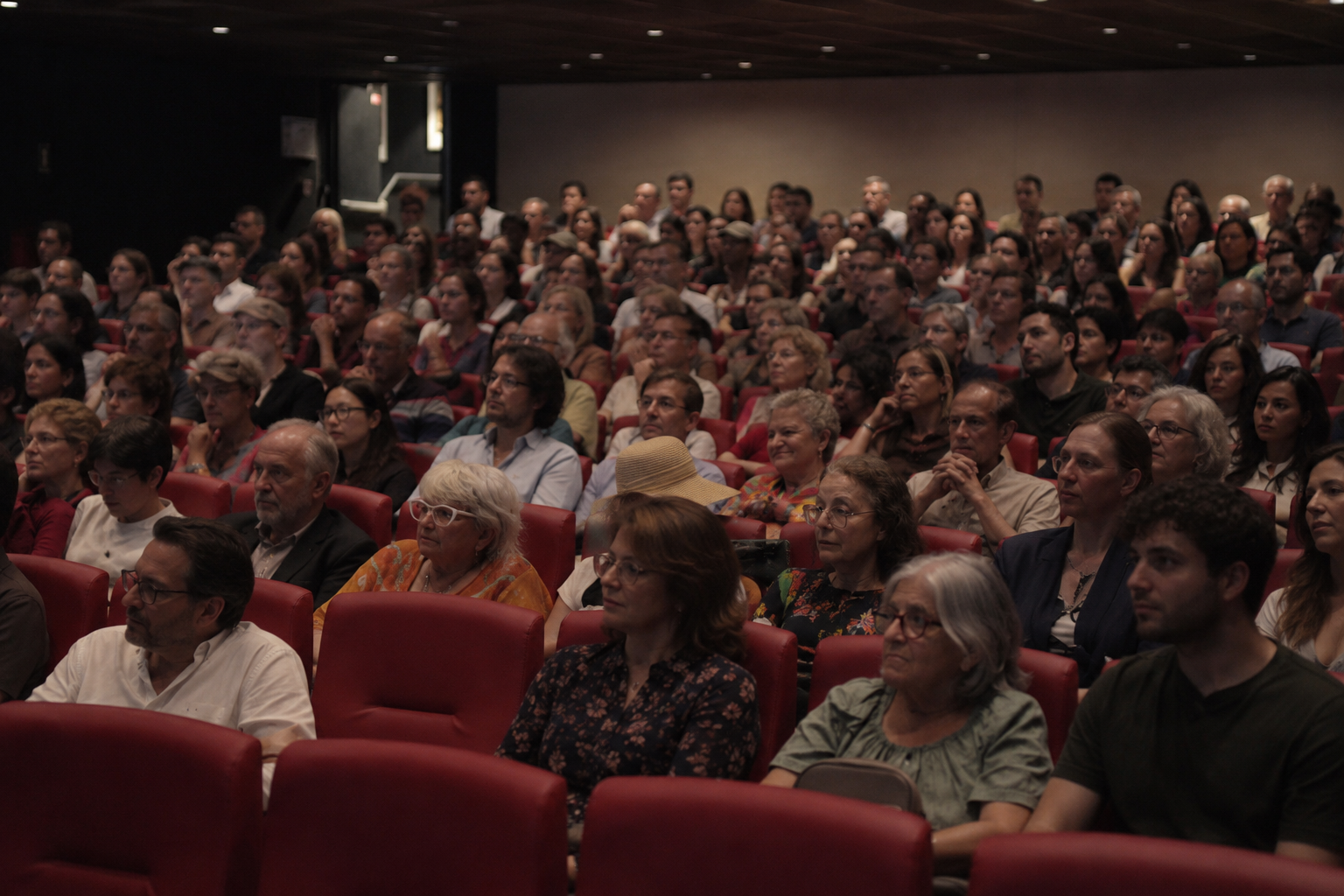
The inaugural edition of the Saudi Independent Cinema Salon, hosted at ESRA Paris: the Graduate School of Film, Audiovisual and Digital Arts, on 9 July 2026, stands as a compelling example. Founded by filmmaker and visual artist Gigi Hozimah, together with Benjamin Azoulay, co-founder of the Salon, Vice President of ESRA Paris, and a dedicated advocate for international cultural exchange, the initiative reflects a shared belief in culture's unique ability to build bridges between people.
From the moment the Salon was announced, it was clear that its ambition extended far beyond adding another event to the international festival calendar. Instead, it set out to create a space for dialogue, one in which cinema becomes a catalyst for reflection and conversation rather than merely an object of exhibition.
The choice of Paris was far from incidental. Since the mid-twentieth century, the French capital has been synonymous with the birth of Auteur Cinema, a concept championed by French critics and filmmakers who argued that a film should bear the personal vision of its director just as a novel bears the unmistakable signature of its author. It was from this very perspective that Gigi Hozimah envisioned Paris as the ideal home for a salon dedicated to Saudi auteur cinema, a setting whose profound cultural symbolism places the Saudi cinematic experience in direct dialogue with one of the world's foremost intellectual traditions that helped shape modern film discourse.
Over the past decade, Saudi cinema has undergone a remarkable transformation, not only in terms of production but also in the evolution of its artistic language. Alongside commercially driven filmmaking, a new generation of directors has emerged, choosing to express deeply personal visions through works that explore questions of identity, memory, human relationships, and social change. These are precisely the defining characteristics of what is internationally recognized as Auteur Cinema. The Saudi Independent Cinema Salon was conceived to provide these filmmakers with the platform they deserve – a space where independent artistic voices can flourish beyond the pressures of competition and the demands of the marketplace.
This vision found its clearest expression in the Salon's inaugural programme, which brought together a remarkable diversity of Saudi cinematic voices. Although each filmmaker embraced a distinct artistic language and sensibility, they were united by a shared commitment to creative freedom and the independence of personal vision.
The programme opened with (The Moment Mozart Mourned Himself) by Aqeel Al-Khamis, a contemplative short film that reflects on the fragile relationship between art, memory, solitude, and the vulnerability of the creative act. It continued with (Reflections on Smokers) by Mohsen Ahmed, an experimental meditation that transforms the ordinary rituals of everyday life into a poetic cinematic experience. This was followed by (Damaged Masculinity) by Majed Al-Seyhati, a compelling drama exploring questions of identity, social transformation, and evolving perceptions of masculinity within contemporary Saudi society. The programme culminated with the feature film (And Then Comes Winter), written and directed by Gigi Hozimah, whose distinctive cinematic language is shaped by memory, silence, and profound psychological depth.
Taken together, these works offered a compelling portrait of a vibrant Saudi independent cinema that refuses to speak with a single voice. Instead, they revealed a rich mosaic of artistic perspectives and human experiences, reflecting both the vitality and the creative diversity of today's Saudi cinematic landscape.
The programme at ESRA Paris was conceived as far more than a succession of film screenings.
It was carefully curated as a comprehensive cultural experience that brought together cinematic presentations, post-screening discussions, and visual art in a shared space for artistic dialogue.
The conversations that followed each screening offered French and Arab audiences the opportunity to engage directly with the filmmakers, transforming the films into starting points for reflection and exchange rather than mere objects of exhibition.
The experience extended beyond cinema through the visual arts exhibition (My Body… My World), featuring works by Gigi Hozimah and Hanaa Hijazi. By expanding the very notion of the moving image, the exhibition reaffirmed that cinema does not exist in isolation from the visual arts but continually draws inspiration from them while reinventing them through its own expressive language. In doing so, it opened a parallel visual dialogue that echoed the cinematic conversations unfolding throughout the Salon – one centred on identity, memory, the body, and the complexity of human experience.
Within this context, Gigi Hozimah's contribution as the founder of the Salon deserves particular recognition. What she has created extends far beyond the organisation of a cinematic event; it reflects a thoughtful cultural vision rooted in the conviction that Arab cinema deserves independent platforms where it can be explored, discussed, and appreciated within a broader international context. Her vision is founded on the belief that a film's journey does not end when the screening is over. Rather, that is precisely when its most meaningful life begins, through dialogue, interpretation, and the multiplicity of readings it inspires. It is this philosophy that has given the Salon its distinctive identity, transforming it into a laboratory of ideas rather than simply another celebratory cultural event.
Equally essential was the contribution of Benjamin Azoulay, whose role proved instrumental in translating this vision into a tangible reality. Through the development of strategic cultural partnerships, the strengthening of the Salon's institutional foundations, and an unwavering commitment to the highest professional and organisational standards, he helped shape an event distinguished by both artistic integrity and cultural excellence. Their collaboration stands as a compelling example of how successful cross-cultural initiatives are built upon the convergence of artistic vision and organisational expertise, sustained by a shared belief that culture possesses the power to transcend geographical borders and linguistic divides.
The true significance of the Saudi Independent Cinema Salon lies not simply in presenting Saudi films in Paris, but in reshaping the way they are received and understood. Rather than being viewed as local productions confined to a specific social or cultural context, these works are invited into a global cultural conversation that celebrates diversity while engaging with fundamental questions of artistic expression, cinematic language, and the human condition. It is precisely here that the enduring value of cultural initiatives becomes most evident: they do more than cultivate new audiences; they create new frameworks for interpretation, opening fresh possibilities for dialogue, understanding, and critical engagement.
Perhaps the Salon's most remarkable achievement lies in restoring the cultural salon to its rightful place at a time when digital platforms and the rapid consumption of images increasingly dominate our relationship with cinema. The direct encounter between filmmakers and audiences, the conversations that follow each screening, and the exchange of ideas among artists, scholars, and students all restore cinema to its essential human dimension. They remind us that cinema is not merely an art to be watched, but one to be experienced through dialogue, an art that is born in conversation and continues to evolve through it.
The inaugural edition of the Saudi Independent Cinema Salon should not be seen as the conclusion of a project, but as the beginning of a long-term cultural journey. It lays the foundations for a new tradition that, in the years to come, has the potential to establish itself as a leading annual gathering in Europe for audiences eager to discover Saudi independent cinema through the authentic voices, artistic visions, and creative sensibilities of its filmmakers, free from stereotypes, preconceived narratives, and simplified representations.
In an era when film festivals increasingly resemble one another in both format and their pursuit of visibility and media attention, the Saudi Independent Cinema Salon has deliberately chosen a different path; one that embraces cinema as a space for reflection, dialogue as the natural continuation of the cinematic experience, and culture as a universal language capable of transcending borders. Its success, therefore, cannot be measured by attendance figures alone, but by the intellectual impact it leaves behind and by the questions it continues to provoke long after the screen has gone dark. For true cinema does not end with its final scene; rather, it begins its most profound journey in the consciousness of its audience, where every film continues to live through reflection, interpretation, and dialogue.