It is no coincidence that the history of cinema has witnessed several waves. The French New Wave at the end of the 1950s saw a new generation of filmmakers emerge to leave an indelible mark on cinema history. Figures such as François Truffaut, Jean-Luc Godard, and Claude Chabrol became synonymous with the movement. Since the nature of waves is successive and interconnected, this new wave was itself an expression of the one that preceded it. Cinematic waves collide, and each leaves its mark and its echo. Given the multiplicity of shores, there is nothing surprising about the proliferation of waves. A new wave emerged simultaneously in Britain. Each cinema has its own wave — whether explicitly defined as such or not — reshaping itself across eras, much as happened with Italian Neorealism.
Those waves were an expression of their historical moment, emerging in the aftermath of the Second World War. Each era has its own way of generating cinematic waves, as does each place. In the East, it was necessary both to confront what arrived from outside and to reconsider what was being produced internally. This is evident in Chinese cinema and its response to Western influence, as well as in Taiwanese and Korean cinema, which has left its mark on what we watch in recent years. The same holds true across the globe: filmmakers eager to tell their stories in the language of their era can readily participate in creating cinematic waves, as long as the cinematic realm remains open to all.
The Power of Cinema
Knowledge of those who came before you helps you ride the waves, shorten the journey, forge your own path, and leave your mark in the vast expanse of cinema — for every shore has its waves, with their own heights and unique qualities that cannot be replicated elsewhere.
Cinema, with its inherent power, draws everyone toward the desire to create their own wave and etch their name in this rich history. Tarkovsky attributed the power of cinema to its ability to provide a vivid experience unlike that of any other art form — one that expands and intensifies the individual’s experience, not merely enhancing it but extending it. This captivating quality invites individuals, both filmmakers and spectators, to engage in the cinematic experience. In Tarkovsky’s terms, cinema reflects the human need to understand and comprehend the world. It is the contemporary means through which a filmmaker expresses their vision of the world, and the intersection of the audience with what they see creates a connection — a bond between all parties involved, one that may inspire more creation or prompt one to pause.
Understanding the Phase
It is essential to keep pace with time and ride the right wave at the right moment. This awareness shortens the distance and protects you from falling. Each stage has its own tools, and the successes of the past cannot be replicated in a later era without understanding what is currently happening. The evolution of cinema in each phase provides filmmakers with an ever-expanding set of tools. Early cinema was silent, as the circumstances of the time demanded; then sound was introduced to enrich the scene. Colors were added to bring life, and new technologies deepened the magic of cinema. The dominance of light in the darkness of cinema halls enriches the industry and facilitates filmmaking, yet the task remains challenging — satisfying an audience that is increasingly discerning and has everything within reach.
The Speed of Time
Films used to be long — exceedingly long — without boring audiences who regarded cinema as a weekly ritual and would sit for three hours or more without complaint. In an age of speed, however, three hours is an exceptionally long time. Warnings are now issued before a film begins, stating that it runs for more than two hours, prompting many to reconsider before entering the cinema.
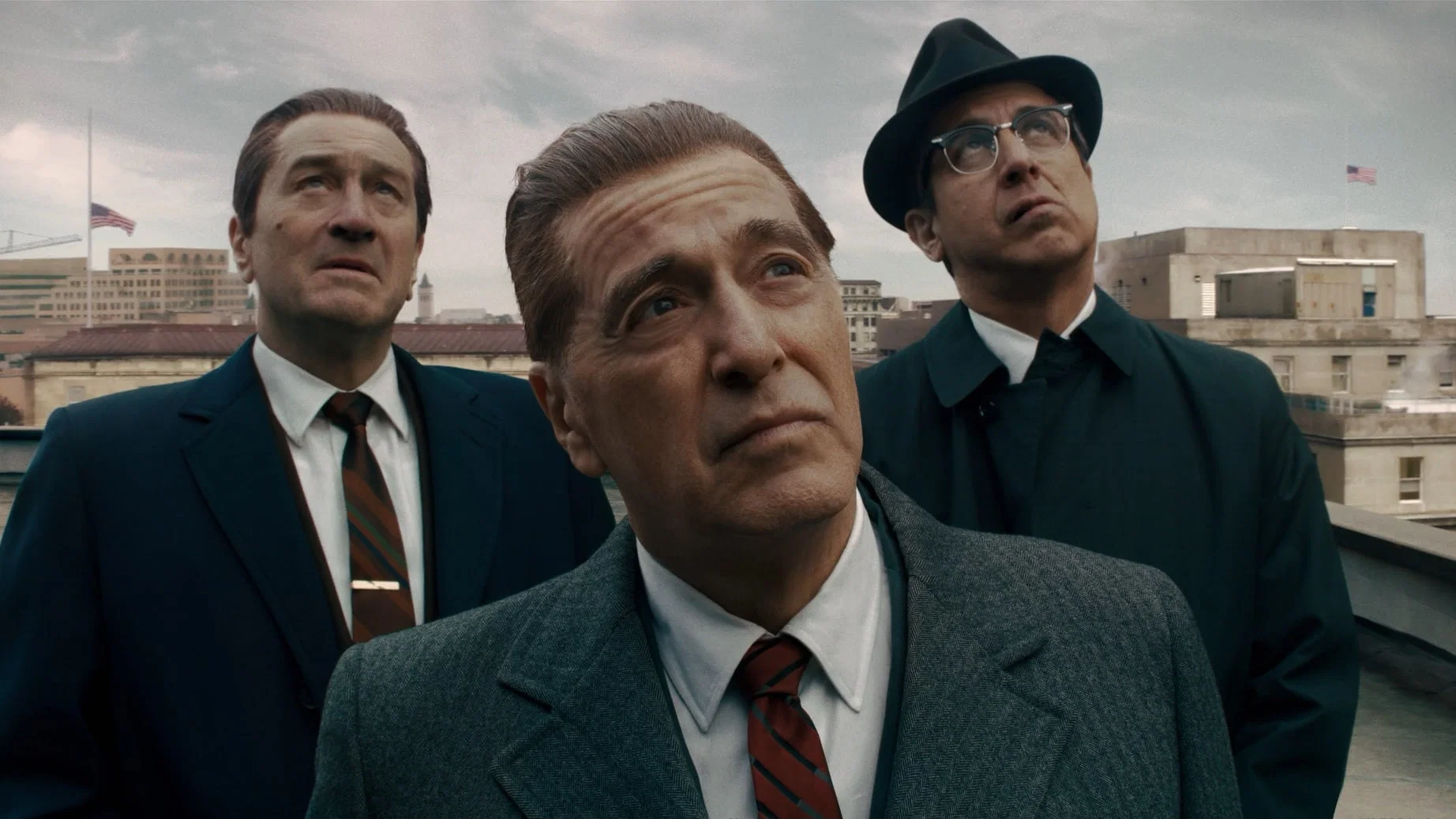
I remember the release of Martin Scorsese’s (The Irishman) on Netflix in 2019, starring Robert De Niro, Al Pacino, and Joe Pesci — a film with a running time of three and a half hours. I was fully absorbed in it, eagerly anticipating this new work that audiences had long awaited, particularly given the production challenges it had faced. Without Netflix’s support for the experiment, and Netflix’s desire to have a prominent name like Scorsese on their platform, the film would not have been made. The film was discussed at a cinema club meeting managed by our colleague Younus al-Battat on January 1, 2020, attended by enthusiasts of various inclinations. There was a large group of devoted Scorsese fans eager to discuss the film, and a smaller group of Netflix viewers who came to voice their frustration — which centered almost entirely on what they considered the film’s excessive length. My response was to point out the contradiction: these same viewers were fans of television series whose total running time far exceeds this film’s length, yet they will sit and watch episode after episode without leaving their chair — while finding it impossible to watch a single film for three and a half hours.
Understanding Time
I later reconsidered my own position. I understood the difference, and recognized the danger of allowing nostalgia to bias one’s judgment — the nostalgia that tends to grip those captivated by Scorsese’s earlier work in (Casino), (Goodfellas), and the world of (The Godfather). Each era has its own films, its own new milestones, its own heroes and atmosphere. It is necessary to understand the stage and respond to it. In an interview with Iranian director Abbas Kiarostami, as cited by Amin Saleh, he says: “We live in the era of SMS and text messaging, and this will change our era, because it will change the pattern and habit of conversation. Sentences have become concise, condensed, and short. You convey the meaning you want very quickly. With haiku — a form of poetry composed of only three lines, with five to seven syllables each — you strip poetry of its embellishments. It goes to the heart of the matter, and people will take notice.”
Understanding the speed of time, the tools of communication, and their incorporation into the films we watch as living elements of our daily lives — their emergence on screen as a new language not devoid of emoji, and in the language of the stage with all its signs — has become both a reality and a necessity. It is essential to address the new generation in its own language. Kiarostami did not abandon his poetic sensibility; rather, he attuned himself to a tone that suits the era, embodied by haiku. It is equally essential to understand the stage and not cling to length when brevity can convey the message without exaggeration.
Riding the Wave
Initially, directors were not receptive to Netflix. Everyone recalls the early resistance to allowing streaming films to compete in major awards such as the Oscars and Cannes, with figures like Steven Spielberg among those who objected. The reality shifted, however, with the participation and victory of Alfonso Cuarón’s Roma, followed by further triumphs. Netflix films continued to secure more nominations each year, eventually drawing in directors of the stature of Scorsese.
Scorsese’s willingness to ride the wave, despite his age, is preferable to abstaining from it — even if he cannot keep pace with everyone else. He is aware of his place in life, as he said to Quentin Tarantino in an interview translated by Radi Al-Namasi, speaking about his experience making The Irishman: “When you reach my age, Quentin, you become a bit slower and more contemplative.”
It is to his credit that this slowness and contemplation have not prevented him from riding the wave. The life of the active and productive is better than a death shrouded in the guise of life, proclaiming that “the good ones are gone.”