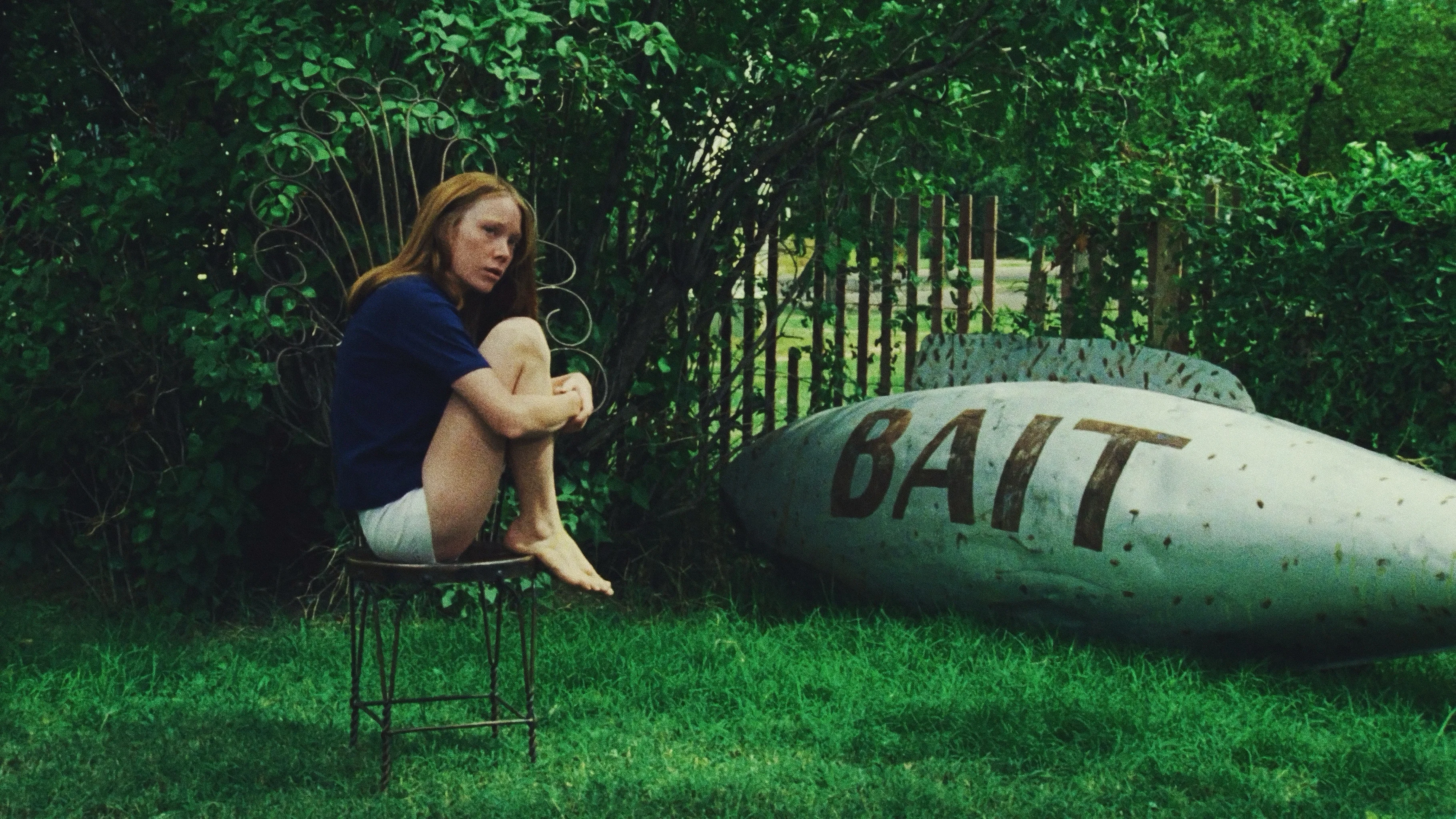
“Malick has discovered, or rediscovered, how to know the basic fact about the photographic rule in cinema, which is: things have a photographic presence of their own; they participate in reinventing themselves in films; they are fundamental in creating an appearance.”
— Stanley Cavell
Back to Basics
The relationship between cinema and philosophy is nothing new. From the very first emergence of cinema, philosophical questions and problems that resist resolution outside the framework of philosophical inquiry began to arise. All major philosophical schools have contributed to this cinematic legacy, and hundreds of books and academic studies on the philosophy of cinema attest to its richness. Yet phenomenology, or phenomenological philosophy, has not enjoyed wide popularity among cinema scholars — not because it is a recent philosophy, but because other philosophical currents proved stronger and more influential in critical film studies.
Since the 1970s, coinciding with the appearance of Lebanese-American director Terrence Malick’s first two films, Dudley Andrew — Professor of Film and Comparative Literature at Yale University — published a paper entitled “The Neglected Tradition of Phenomenology in Film Study.” In it, Andrew criticizes the disregard common in academic cinema circles for “the special way in which meaning is experienced in cinema, and the unique feature of experiencing many films." 1
Andrew traces a new history in philosophy that considers phenomenology a “first philosophy” — one that calls for a return to actuality and experience. In cinema, this is what forms the basis of a film’s meaning: the perception of a film matters more than its abstract idea. The role of the self is therefore central, and it is precisely this role that Edmund Husserl, the actual founder of phenomenology, emphasized. Husserl insisted on the part the self plays in constructing the themes of the outside world — a construction achieved through basic impressions furnished to us in advance through space, time, memory, perception, and imagination. For Husserl, phenomenology is a call to return to the basics, to the original gift, to things themselves, to the first axiom. Cinema that wishes to retain its capacity to hold an audience’s attention must seek out the phenomenological experience that exists before us, examine what that experience means, and find ways to present it to the viewer.
Malick: Phenomenologically and Cinematically
Terrence Malick is associated in many minds with being a poet of cinema, perhaps owing to the prominence of nature scenes in his films. But Malick was deeply engaged with philosophy and phenomenology before ever turning to cinema. His academic life reveals a great passion for philosophical inquiry: in his early years, he studied the concept of the world through the works of philosophers such as Kierkegaard, Heidegger, and Wittgenstein, and later taught phenomenology at the Massachusetts Institute of Technology (MIT). He also translated the German philosopher Martin Heidegger’s The Essence of Reasons. In 1969, Heidegger — whose philosophy accompanied Malick throughout his entire cinematic career — had been influenced by his teacher Stanley Cavell, the author of the epigraph above, who had himself studied under Heidegger.
This intellectual richness did not leave Malick when he turned to filmmaking and directed his first feature, (Badlands), in 1973. Despite the long fallow periods between his films — roughly twenty years separating his second film (1978) from his third (1998) — his distinctive approach to writing and directing attracted the attention of many critics and audiences, even if they could not agree on a unified reading of his method.
Malick’s first two films — Badlands and (Days of Heaven, 1978) — appeared during the prevalence of the so-called New American Wave in Hollywood and did not generate much controversy at the time. They were followed by his twenty-year absence from the scene. That withdrawal, and his refusal to speak to the press, are characteristic habits of Malick in his dealings with the world. With his return to cinema, however, the debate surrounding his films and his cinematic vision grew considerably. His films carry within them multiple visions and interpretations that resist reduction to a single direction or doctrine. What further complicates interpretation is the presence of voice-over narrators within the films, which increases their opacity, their ambiguity, and the difficulty of arriving at a comprehensive explanation of all the ideas they contain. While some viewers find these narrative voices disruptive and unnecessary, others find that they give his films a philosophical impetus, enabling the narrators to express their vision of existence more freely and to pose their own existential questions — even when answering those questions is not among the film’s aims.
This distinctive vision has made Malick’s films difficult for many viewers to watch, understand, and engage with. Yet it has also been a masterly way of imprinting a singular style across all his work: if you watch one film in depth, you will have little difficulty recognizing that style in any other. According to director Christopher Nolan, Malick’s style connects his films with a coherence that makes identifying them an immediate process — giving them a clear character that is unmistakable, even if, as Nolan acknowledges, one cannot put a finger on exactly what produces it, since the technique is never immediately apparent. This quality has made Malick one of the directors to whom Nolan returns most often. 2
Films on the Frontiers of Human Experience
Malick’s films attempt to engage with many themes simultaneously: life, meaning, love, existence, war, death, and other difficult subjects. His characters are Heideggerian figures haunted by spiritual anxiety, which the German philosopher identifies as the original condition of existence. They are figures thrown into that existence and still searching to understand their place in the world.
A constant across Malick’s films is how they astonish the viewer visually — itself a directorial signature through which any of his works can be identified. Malick is among the rare directors capable of combining landscape photography with intimate close-up shots without sacrificing cinematic depth.
In (The Tree of Life, 2011), for example, we find a non-linear account of Jack’s life: not a traditional story or a conventional narrative, but a synthesis of personal and family life and Jack’s memories, interspersed with passages about the origin of life and the universe. Although the director wanted viewers to attend to the conflicts between the characters while simultaneously opening their imagination through scenes of nature and the cosmos, the separation between these two registers does not diminish the intimacy or emotional resonance of the scenes involving the protagonists.
For Nolan, when we watch films by directors such as Stanley Kubrick, Terrence Malick, or Hitchcock, there is no natural separation between visual style and narrative element. What we see is a vital and inextricable relationship between the images before us and the story we are following — a relationship that, according to David Fincher, means that everything in Malick’s films is part of a larger mystery. 3
The human experience in Malick’s films is not confined to the relationship between people; it extends, as noted above, to the relationship between humanity and nature, and sometimes to the relationship of nature with itself. There is also the question of God and religion, which surfaces in each of his films — an unavoidable question for anyone who wishes to engage with ethical problems on screen.
Malick’s characters are not required to provide answers to the questions they pose. Malick shares with Karl Jaspers the conviction that questions in philosophy are more important than answers, and the role of questions in his films is to illuminate the eternal struggle of existence — between human and human, between nature and nature, and between humanity and God. Every Malick film begins with a set of questions centered on that triad. (The Thin Red Line, 1998), though concerned with war between human beings, opens in its very first moments with questions addressed to nature: “What is this war that is taking place in the heart of nature? Why does nature challenge itself? Is it possible that there are forces of revenge in nature?”
We will explore Malick’s films more deeply in forthcoming articles, though their limitations must be acknowledged from the outset. We will agree with Merleau-Ponty that the greatest lesson of phenomenological reduction is the impossibility of complete reduction — and that, in the end, only what is given to the self will remain.