Saudi cinema has been changing fast. Over the past few years, it has seen growing production, increasing presence at international festivals, and global recognition for several local films — developments that have opened a wider conversation about Saudi cinema's place in the world, and generated serious critical interest in what this movement might become. Behind this momentum lies a clear ambition: to elevate Saudi cinema into an authentic artistic expression of local culture, and to establish it as a meaningful voice in global cultural dialogue.
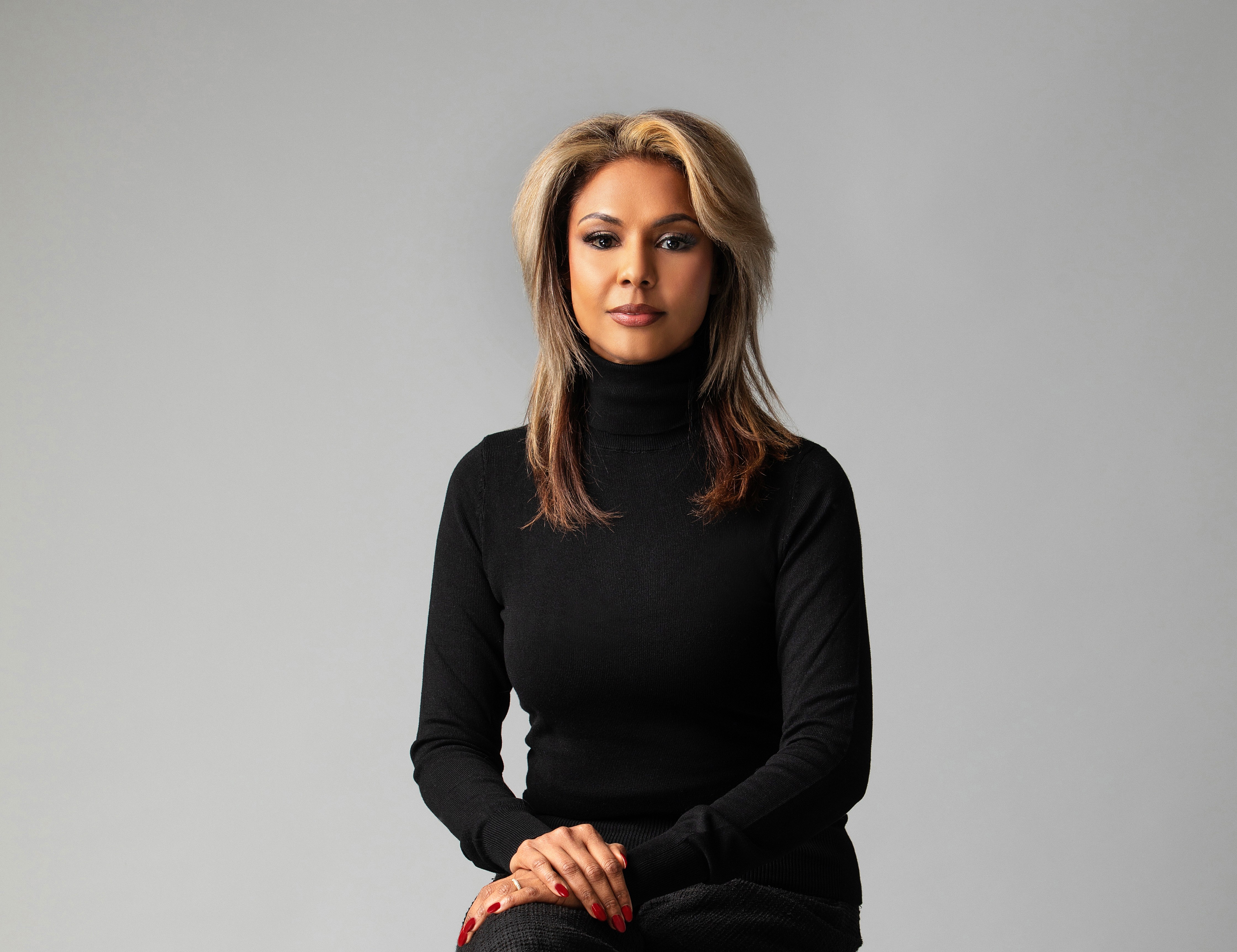
The Saudi Independent Cinema Salon — founded and led by filmmaker Gigi Hozimah — is a direct response to this moment. It is a critical space dedicated to Saudi auteur cinema: to its works, its challenges, and the distinct artistic vision that independent filmmakers bring to their craft. The Salon was created out of a genuine need to give independent Saudi films the attention they deserve — to present them to global audiences, engage with them critically, and open a real conversation about the difficulties independent filmmakers face.
Meem spoke with Gigi Hozimah about this project, its cultural importance, and what it means for the future of independent Saudi cinema.
Meem: How did your journey as a filmmaker begin, especially at a time when there were very few clear cinematic models in Saudi Arabia? What first drew you to directing?
Hozimah: At a time when there were no clear models in Saudi Arabia, there was no ready-made path. That is precisely what made the experience more honest. My journey was shaped by necessity rather than planning. I had a brief experience in television presenting, but it was enough for me to realize that it was not the path I was looking for. Later, almost by coincidence, I joined a short course at Bournemouth University. During those days, one of the teachers pointed out that I had an eye for image and visual composition, and that I might be closer to directing than to appearing in front of the camera. That simple observation stayed with me. From there, cinema became a way to understand myself, to understand the world, and to give shape to feelings I could not easily express in ordinary language.
Meem: Your films — including He Belongs to Us, That Abandoned Place, and It’s Always That Feeling — often explore the human interior and its relationship to the outside world. What is the artistic wager behind this recurring concern?
Hozimah: For me, cinema begins from what is hidden inside the human being. I am not interested in explaining characters from the outside, or in reducing them to events. I am interested in the tension between what a person shows and what they carry silently within. The outside world is always present in my films, but it often appears as pressure, distance, memory, or absence. In that sense, the landscape, the room, the silence, and the light are not decorative elements — they are emotional spaces. My artistic wager is that cinema can reveal what is difficult to say directly. It can make the invisible visible without overexplaining it.
Meem: In And Then Comes Winter, you tell an intimate and tense story on the eve of a looming war, using a poetic and restrained style. How did you balance the emotional tension with the film’s minimalist aesthetic?
Hozimah: And Then Comes Winter is not a war film in the traditional sense. It is a film about the moment before collapse, when people still sit at the table, still look at one another, still try to behave normally, while something larger is approaching. I wanted the tension to come from restraint, not from spectacle. The silence, the pauses, the glances, and the emotional distance between the characters carry the weight of the film. The minimalist approach was essential because it allowed the viewer to feel the pressure beneath the surface. I wanted beauty to be present, but not as decoration. Beauty in this film is fragile, almost threatened. It exists in the same space as fear.
Meem: Independent Saudi cinema has taken shape over the past decade, with Saudi filmmakers expressing their ideas and visions in increasingly visible ways. How do you read this movement today?
Hozimah: I see it as a necessary and promising movement, but also as a movement that still needs protection from easy definitions. Independent cinema is not just a production label. It is not simply a film made outside a studio, or a film with a small budget. Independent cinema is a way of thinking. It is cinema that does not try to please the market first, but tries to express a vision. In Saudi Arabia, many filmmakers are now searching for their own language, and that is the most important part. The real value of this moment is not only in the number of films being produced, but in the possibility of hearing different voices, different rhythms, and different ways of seeing.
Meem: Saudi films have gained growing visibility in international festivals in recent years. How do you see the effect of this presence on the position of Saudi independent cinema and the voice of the Saudi artist globally?
Hozimah: International presence is important because it opens doors and creates curiosity around Saudi stories and Saudi filmmakers. But visibility alone is not enough. The deeper question is: what kind of cinema are we presenting? Are we presenting films that only confirm expectations, or films that expand the understanding of who we are? For me, the global presence of Saudi cinema should not be limited to representation. It should also include artistic risk, complexity, and personal vision. The Saudi artist has a voice that can be local and universal at the same time — but only if that voice is allowed to be honest and free.
Meem: How did the idea of the Saudi Independent Cinema Salon emerge, and what role do you want it to play within the growing Saudi cinematic movement?
Hozimah: The idea of the Saudi Independent Cinema Salon came from a very real need. I wanted to create a space where cinema could be treated as an art form, not only as an industry event or a red-carpet occasion. The Salon is not built around glamour or competition. It is built around encounter, conversation, and discovery. Its role is to give independent Saudi films another kind of presence: a presence that allows them to be seen, discussed, and placed in dialogue with audiences, critics, artists, and cultural institutions. I see it as a bridge — but also as a protected space for auteur voices.
Meem: The Salon includes a visual art exhibition alongside the film program. Why was it important for you to bring visual art into a cinematic event?
Hozimah: For me, cinema has never been separated from visual art. Before a film becomes a story, it is already an image, a space, a texture, a rhythm, and a way of looking. Including a visual art exhibition allows the Salon to expand beyond the limits of a traditional screening. It creates a sensory and artistic environment around the films. It also reflects the way I personally understand cinema: not only as narrative, but as a visual and emotional experience. The exhibition helps the audience enter the world of the Salon before the screen even begins.
Meem: Independent cinema often faces challenges related to funding, support, cultural expectations, and access to platforms. How can independent filmmakers overcome these difficulties?
Hozimah: The challenges are real. Funding is difficult, access is not always equal, and independent filmmakers often have to fight for space. But I also believe that independence begins with clarity. A filmmaker must know what kind of cinema they want to make, and why. Without that inner clarity, it is easy to be pulled in every direction. Practically, we need more alternative platforms, more partnerships with cultural institutions, more serious conversations around film as art, and more support that does not force filmmakers to dilute their vision. The independent filmmaker survives by being stubborn — but also by building alliances.
Meem: In light of the development of Saudi cinema, the growing number of productions, and the emergence of Saudi filmmakers in global festivals, why do we still need spaces such as the Saudi Independent Cinema Salon?
Hozimah: We need spaces like the Salon because production alone does not create a cinematic culture. A true cinema culture also needs viewing, dialogue, criticism, memory, and continuity. Festivals are important, but they are not the only model. A salon can offer something more intimate and more sustained. It can introduce films differently, create conversations around them, and help build a serious audience for independent Saudi cinema. The goal is not only to screen films, but to shape a way of seeing them.
Meem: The Salon is supported by French partners, including ESRA, a leading school in audiovisual and directing education. What is the importance of this support for Saudi filmmakers, and how can the Salon become a bridge between Saudi talent and experienced international professionals?
Hozimah: The support of partners such as ESRA is very meaningful because it places Saudi independent cinema within a serious educational and cultural context. ESRA is not only a venue; it is a school with experience, students, filmmakers, and a real connection to the audiovisual field. This creates opportunities for exchange, not only exposure. For Saudi filmmakers, such a partnership can open doors to dialogue with French and international professionals, and can help position Saudi cinema as part of a wider artistic conversation. The Salon can become a living bridge between emerging Saudi voices and people who have long experience in cinema, criticism, education, and production.
Meem: Through screenings and critical discussions, the Saudi Independent Cinema Salon seeks to introduce Saudi and French audiences to independent Saudi films. How do you hope the Salon will affect the way these films are received outside their local context?
Hozimah: I hope the Salon allows audiences to receive Saudi films as cinema first. Of course, culture and context matter, but I do not want Saudi films to be watched only through the lens of curiosity or representation. I want them to be discussed in terms of image, rhythm, silence, performance, form, and artistic intention. When a French or international audience sees a Saudi film in this way, the relationship becomes deeper. The film is no longer only a window into a culture. It becomes an artwork that can be interpreted, questioned, and felt.
Meem: Based on your long experience in independent cinema, what advice would you give to Saudi filmmakers who want to present their work locally and globally?
Hozimah: My advice is to protect your voice. Do not rush to imitate what is already visible, and do not confuse recognition with truth. A filmmaker must learn, study, collaborate, and understand the industry — but without losing the private reason that made them want to make films in the first place. Cinema is not only about opportunity. It is about a way of seeing. If your film comes from a real place, even if it is quiet, difficult, or unconventional, it will carry something alive. That is what lasts.