ESRA, one of France’s leading institutions for film and audiovisual education, has played a significant role in training generations of directors, producers, screenwriters, and technical professionals who have gone on to work across the film, television, and media industries. Throughout its history, the school has sought to position itself not only as a center for professional training, but also as a space for cultural dialogue, fostering international collaborations and engagement with diverse cinematic traditions.
Within this framework, the Saudi Independent Cinema Salon was established as a joint initiative between ESRA and Saudi-American filmmaker and producer Gigi Hozimah. Conceived as an annual cultural platform, the Salon aims to strengthen dialogue and exchange between Saudi independent cinema and the international film community. Beyond film screenings, the initiative seeks to create a sustainable space for discussion, reflection, and the sharing of knowledge among filmmakers, students, and cultural practitioners.
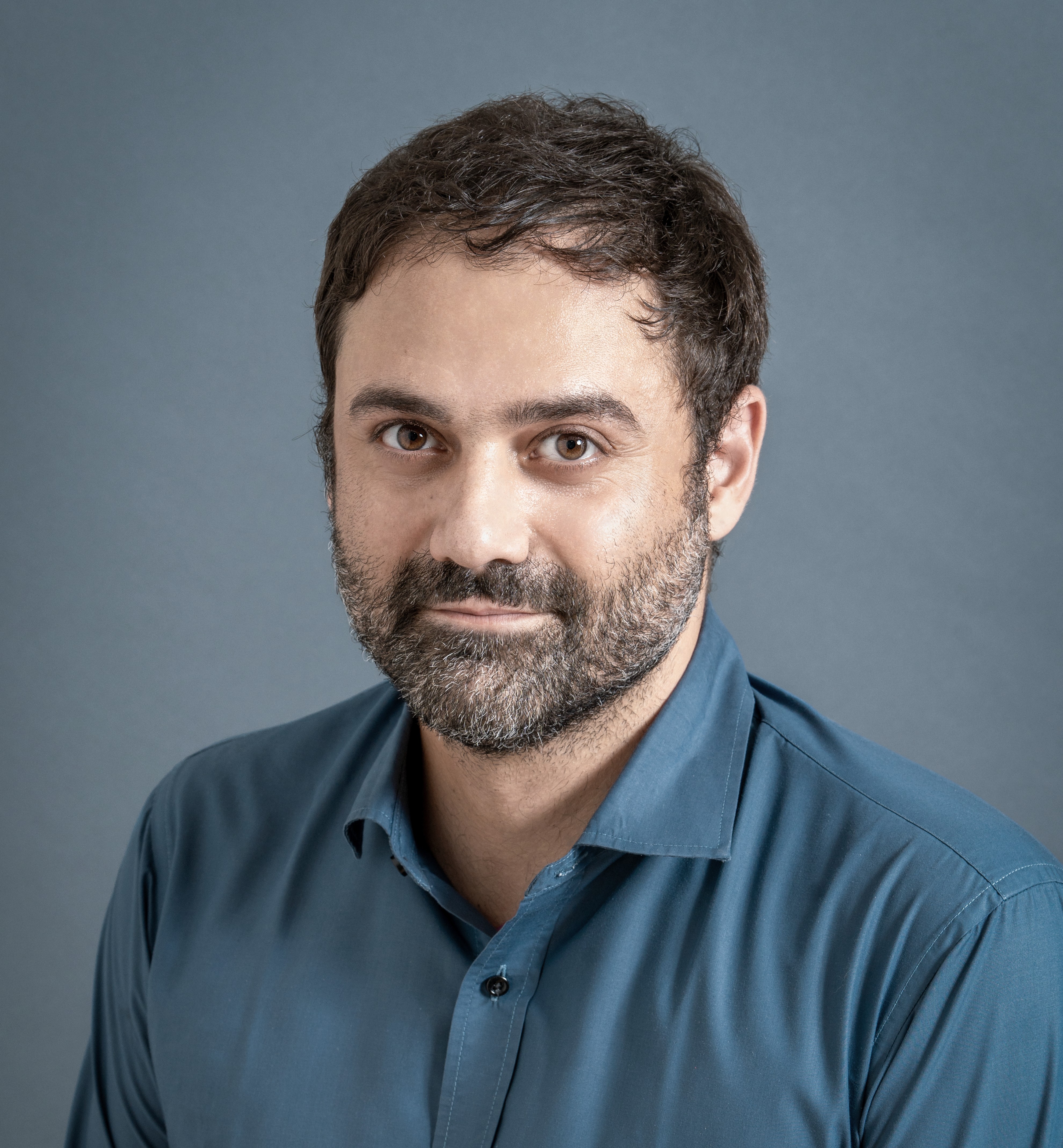
In the following interview, Cinema Meem speaks with Benjamin Azoulay, Vice President of ESRA, about the transformation of Saudi cinema, the role of educational institutions in supporting creative industries, and the vision and long-term ambitions of the Saudi Independent Cinema Salon as a sustainable annual cultural initiative.
Meem: In recent years, Saudi Arabia has witnessed a remarkable cinematic transformation. How do you view this evolution from the perspective of a leading film education institution?
Azoulay: Having attended both the Red Sea International Film Festival in Jeddah in 2023 and the Saudi Film Festival in Dammam in 2024, I have had the opportunity to witness this transformation firsthand.
What is particularly remarkable is that Saudi Arabia is not only developing a film industry but also building a complete cinematic ecosystem that includes festivals, education, exhibition venues, professional training, and audience development. At the same time, these recent developments build upon the work of filmmakers and cultural pioneers who have been contributing to Saudi cinema for many years.
The question today is no longer whether Saudi cinema will emerge, but how its different voices will evolve and position themselves within the international cinematic landscape.
Beyond the festivals themselves, I was also impressed by institutions that contribute to the development of film culture throughout the year. Hayy Cinema in Jeddah is a remarkable example. Through the quality of its programming and its engagement with audiences, it has become an important meeting place for filmmakers and audiences alike.
I would particularly like to acknowledge the work of Zohra Ait El Jamar and her team. We are also delighted to count Hayy Cinema among the partners of the Saudi Independent Cinema Salon, alongside institutions such as the Institut du Monde Arabe in Paris. These partnerships reflect a shared belief in the importance of cinema as a space for discovery, dialogue, and cultural exchange.
Beyond the visible growth of the industry, I was also struck by the quality of the conversations taking place around cinema. Some of the most memorable moments during my visit to the Saudi Film Festival in Dammam happened after the screenings, discussing cinema, literature, poetry, storytelling, and artistic vision with filmmakers and cultural professionals.
To me, this was another sign of the sector’s evolution. The conversation is no longer only about building an industry; it is increasingly about defining a cinematic identity.
Meem: What are the main challenges still facing emerging filmmakers in Saudi Arabia and the wider Middle East?
Azoulay: The progress achieved in recent years has been impressive, but several challenges remain, particularly access to sustainable financing, international distribution, and long-term career development.
In my view, Saudi cinema is entering a second phase. The first phase was about creating the conditions for an industry to emerge. The next phase is about consolidation. Building a sustainable film ecosystem requires writers, producers, technicians, educators, distributors, and many other professionals working together over the long term.
This is where education and professional training become essential. Developing talent is not only about training directors; it is about strengthening every stage of the process, from development and production to distribution and exhibition.
Meem: How can film schools contribute to building sustainable cinematic ecosystems?
Azoulay: Programs such as those offered at ESRA provide students with an in-depth understanding of the many professions and skills involved in film and audiovisual production. One of the most important aspects of film education is helping students understand how the industry really works and what to expect from the professional world.
Film schools also create opportunities for students to interact with active industry professionals, giving them practical insight into the realities of the profession and helping them prepare to become effective collaborators and future professionals.
One of the things that surprises students is discovering how many careers exist within the industry beyond directing or acting. The film and audiovisual industries rely on a wide range of specialized professions, many of which are less visible but equally essential.
By discovering these opportunities, students can broaden their horizons, multiply their career options, and find the path that best matches their talents and ambitions.
Meem: The Saudi Independent Cinema Salon was founded as a joint initiative between ESRA and filmmaker Gigi Hozimah. How did this partnership emerge?
Azoulay: The partnership emerged from a shared conviction that cinema can be a powerful tool for cultural dialogue.
What struck me during my visits was how much French and Saudi cinema have in common. Both traditions place a strong value on authorship, cultural specificity, and the filmmaker’s personal vision. There is a sensitivity to auteur cinema in Saudi Arabia that I find particularly interesting and familiar from a French perspective.
Gigi Hozimah’s commitment to independent cinema, her long-term vision, and her desire to create meaningful connections between filmmakers from different backgrounds resonated strongly with ESRA’s international mission.
From the beginning, we wanted to create more than an event. We wanted to create a platform capable of generating lasting conversations and collaborations that would take the form of a recurring event in France each year.
Meem: How do you define independent cinema today?
Azoulay: Independent cinema remains essential because it is often where new voices, new ideas, and new forms of storytelling first emerge.
Traditionally, one of the biggest challenges for independent filmmakers has been access to financing, production resources, and distribution. What makes the current moment particularly interesting is that technology is once again helping to lower some of those barriers.
If emerging technologies, including artificial intelligence, help reduce certain production costs, we may see a new wave of independent filmmaking emerge simply because more creators will have access to the tools needed to bring their stories to life.
At the same time, streaming platforms are creating new opportunities for independent films to reach audiences. While theatrical release remains important, digital distribution now allows many films to find viewers across borders and beyond traditional circuits.
Platforms such as Shahid, alongside international streaming services, are helping diversify the types of stories that can be discovered and shared.
Independent cinema is not defined by a budget level or a financing model. It is defined by the freedom to take creative risks, experiment, and tell stories that might not otherwise find a place within more established production structures.
Meem: Does independent cinema have a different meaning in Saudi Arabia than in France?
Azoulay: The core values are similar, but the context is different.
In France, independent cinema has developed over decades within a mature ecosystem. In Saudi Arabia, it is evolving within a rapidly changing environment and reflects the energy of a new generation of filmmakers.
What is particularly encouraging is the diversity of voices emerging today, including the growing contribution of women filmmakers, writers, producers, and creative entrepreneurs.
At the same time, Saudi cinema has not yet settled into a single model. Some filmmakers are pursuing highly personal auteur-driven work, others are exploring commercial genres, and others are experimenting with forms that combine local stories and international influences.
Filmmakers such as Fatima AlBanawi illustrate the confidence with which Saudi artists are developing their own cinematic language.
I see this plurality as a strength because it allows the industry to evolve without being confined to a single definition of what Saudi cinema should be.
Meem: What makes Gigi Hozimah’s work a meaningful starting point for dialogue between French and Saudi cinema?
Azoulay: What I find particularly interesting about Gigi Hozimah’s work is her commitment to cinema as a form of artistic expression rather than simply a commercial product.
Through both her films and her work with the Saudi Independent Cinema Salon, she has consistently championed independent and auteur cinema, as well as the importance of developing a distinct artistic voice.
Her personal journey also makes her a natural bridge between different cinematic traditions. Having studied and worked internationally while remaining deeply connected to her Saudi roots, she brings a perspective that is both local and global.
This resonates strongly with the French understanding of cinema, where filmmakers are encouraged to develop their own voice and perspective.
In many ways, the dialogue we hope to foster through the Salon is built around that shared belief: that cinema is not only an industry, but also a way of seeing the world and expressing unique artistic visions.
Meem: Why is long-term continuity important for the Saudi Independent Cinema Salon?
Azoulay: Meaningful cultural exchange requires continuity. Trust, understanding, and creative partnerships are built over years, not through a single event.
The ambition of the Salon is therefore not simply to organize annual screenings, but to establish a long-term rendezvous where filmmakers, students, educators, and audiences can return each year and continue building on previous encounters.
We hope it will also evolve into a gathering place for writers, producers, and directors, fostering new creative partnerships and encouraging the development of future co-production projects between Saudi Arabia, France, and the wider international film community.
Meem: What distinguishes the Saudi Independent Cinema Salon from other cultural collaborations?
Azoulay: What distinguishes the Salon is that it brings together different parts of the cinematic ecosystem that do not always meet in the same space: filmmakers, writers, producers, students, educators, institutions, and audiences.
The long-term ambition is to create a platform where ideas can circulate freely and where future projects, partnerships, and co-productions may emerge naturally.
In that sense, the Salon is not only a cultural initiative; it is also an investment in the future relationships that will shape the next generation of French-Saudi cinematic exchanges.
Meem: What do you hope ESRA students will gain from participating in the Salon?
Azoulay: Exposure to different perspectives is one of the most valuable aspects of film education.
These exchanges are reciprocal. French students and educators have much to learn from the stories, experiences, and creative energy emerging from Saudi Arabia today. The ability to collaborate across cultures is becoming an increasingly important skill for the next generation of filmmakers.
The Salon also takes place within the broader framework of the Gulf University Program that ESRA organizes in partnership with the French Institutes of the Gulf countries. Each year, students from across the region come to Paris not only to learn filmmaking, but also to create a film together. For many of them, it is the first opportunity to work closely with young filmmakers from neighboring countries and to experience another film culture from within.
What makes the program particularly valuable is that it also places these emerging Gulf filmmakers in direct contact with French students, cinephiles, professionals, and institutions that have a genuine interest in Saudi Arabia and the wider region.
These encounters often lead to lasting professional relationships and, in some cases, become the starting point for future creative collaborations between France and the Gulf.
Meem: Do you see the Salon opening the door to broader partnerships between France and Saudi Arabia?
Azoulay: Absolutely.
What makes me optimistic is that the relationships being built today go far beyond institutional agreements. They are rooted in a genuine curiosity and interest among people who share a passion for cinema and storytelling.
One of the people who has played an important role in this journey has been Soha Alharbi and the team at Generation 2030. Through their guidance and commitment, we have been able to gain a much deeper understanding of Saudi Arabia, its creative community, and the remarkable transformation taking place across the cultural sector.
Many of the filmmakers, producers, educators, and institutions we have met over the past few years were introduced to us through these relationships.
I am also encouraged by the emergence of a new generation of Saudi producers and cultural entrepreneurs. Strong creative ecosystems are built not only by filmmakers, but also by the people who create opportunities, connect talent, and help ambitious projects become a reality.
For me, the Salon is ultimately about creating the conditions for long-term relationships. If, in a few years, we see French and Saudi filmmakers developing projects together, producers exploring new partnerships, or former students building careers across borders, then we will know that the initiative has achieved its purpose.
Meem: Does ESRA intend to strengthen its engagement with Saudi Arabia and the wider Middle East?
Azoulay: Absolutely.
As educators, we have always been drawn to places where new creative voices are emerging. It is therefore only natural for ESRA to take an active interest in regions where new cinematic ecosystems are developing.
What interests me most about Saudi Arabia is not only the scale of the investment, but also the emergence of a new generation of filmmakers, producers, educators, and cultural entrepreneurs who are helping define what Saudi cinema will become.
Our partnerships with MBC Academy, Film AlUla, the French Institutes of the Gulf countries, and the Saudi Independent Cinema Salon reflect a long-term commitment to the region.
Looking ahead, I would like to see more ESRA programs delivered directly in Saudi Arabia and more opportunities for Saudi and French filmmakers to learn from one another.
Meem: What themes most frequently emerge in the work of students from the Middle East?
Azoulay: Many projects explore questions of identity, belonging, family, memory, and social transformation.
My experience has been that students from the region display the same diversity of interests and sensibilities as film students anywhere else.
For example, students from AlUla produced a comedy about being a stranger in Paris, while MBC Academy participants developed projects ranging from socially engaged dramas to highly personal auteur films such as Azur, which was later selected by the Red Sea International Film Festival.
This diversity of themes and approaches is precisely what makes the future of the region’s cinema so exciting.
Meem: What message would you like to share with aspiring filmmakers across the Arab world?
Azoulay: Remain humble and never underestimate the value of small opportunities. Many careers begin with an internship, a volunteer position, a production assistant role, or a chance encounter on a film set.
Do not wait for the perfect opportunity. People often enter the industry through unexpected paths, so take every opportunity to learn.
Be curious, be reliable, and be on time. Talent matters, but our industry is built on trust, teamwork, and reputation.
And most importantly, tell stories that matter to you. Every great national cinema is shaped by filmmakers who bring their own perspective to the screen.
I believe Saudi cinema is approaching that moment, and I look forward to discovering the stories that the next generation will tell.