The term Bollywood derives its first syllable from the former name of Mumbai, which was once written and pronounced as Bombay, while the latter part is derived from Hollywood, reflecting the competition between Indian cinema and the films produced by the world's largest studios in Hollywood. One of the most common misconceptions about Indian cinema is to regard it as a single entity or a single cinematic genre. In reality, the term Bollywood refers exclusively to films produced in North India. Southern India, by contrast, is home to entirely different languages and, consequently, distinct cinematic traditions that reflect and assert their own identities, distinguishing them from the internationally recognized Bollywood industry.
Although India is home to dozens of languages, its film industry—particularly during its formative years—relied primarily on Urdu. Consequently, those who spoke the language were regarded as the most skilled and sought-after professionals, contributing significantly to the popularity and widespread recognition of North Indian cinema, unlike the other cinematic traditions that later emerged across different regions of the country.
Beyond the glamorous image of colorful Bollywood productions, numerous cinematic movements sought to establish their own place, even when founded upon experimentation and a departure from the dominant conventions of Bollywood and its reliance on the Urdu language.
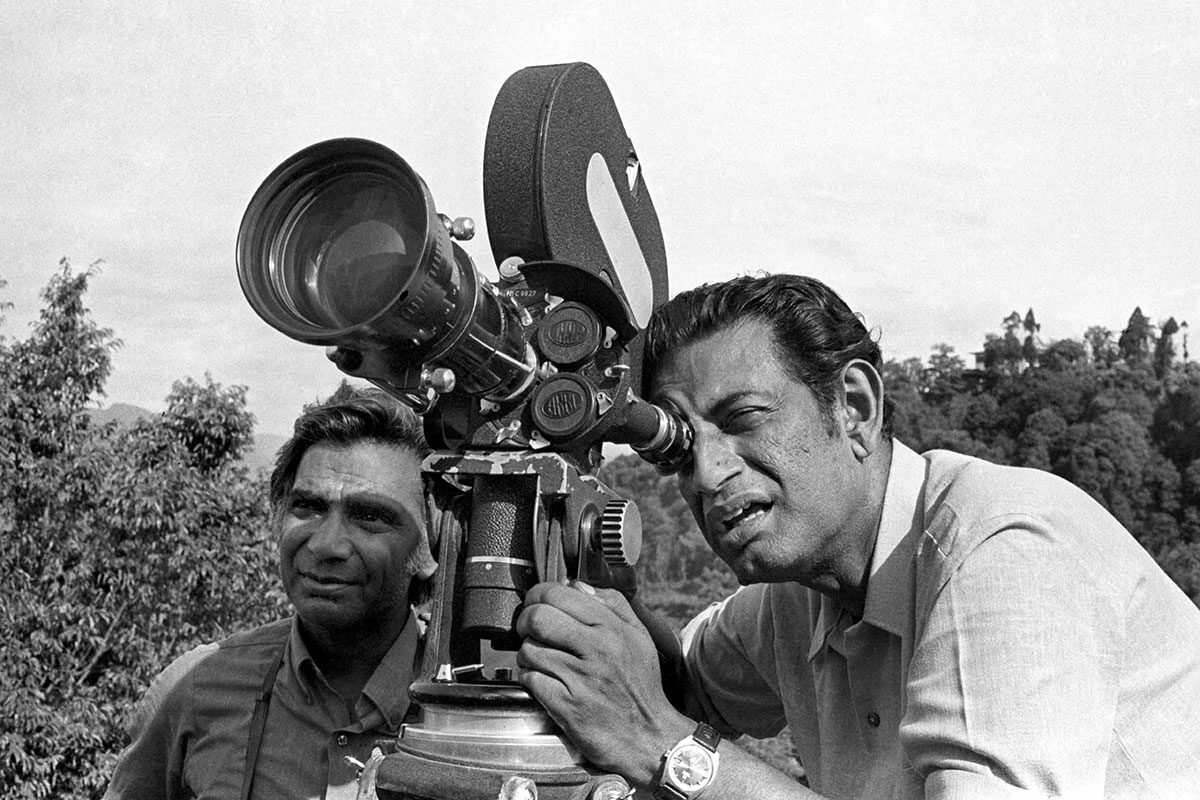
Over time, these movements developed into competing centers of film production collectively known as Regional Cinema of India, with each center taking its name from the city in which it originated, such as Kolkata in the east, and Chennai, Hyderabad, and Bangalore in the south. Perhaps one of the finest historical examples of Indian regional cinema—and one regarded as a model to emulate—is the work of the internationally acclaimed director Satyajit Ray (1921–1992), who remained committed to directing his films in the Bengali language.
Indian regional cinema is as diverse as India's regions themselves. Each cinematic tradition reflects the demographic and cultural characteristics of its respective region. Among the most prominent regional film industries that have established identities distinct from the famous Bollywood tradition are the following:
Tamil Cinema (Kollywood)
Tamil cinema is a film industry based in Kodambakkam, Chennai, in the Indian state of Tamil Nadu. It is the second-largest film industry in India after Bollywood. It rose to prominence during the 1990s, when both the number of cinema screens and the volume of annual film production increased significantly. This period also witnessed the emergence of numerous Tamil stars who continue to dominate the contemporary Indian film industry. Among its most celebrated actors are Kamal Haasan, Rajinikanth, Chiyaan Vikram, and Sridevi.
Many actors who later achieved fame in Bollywood began their careers in Tamil cinema, including Aishwarya Rai, Priyanka Chopra, Katrina Kaif, Sushmita Sen, Amrita Rao, Asin, and Kajol.
Tamil cinema is generally distinguished by its use of the Tamil language in dialogue, which differs considerably from the Urdu traditionally associated with Bollywood films. It also possesses its own distinctive star system, and actors from one regional film industry rarely move to another.
Tamil cinema is particularly renowned for its emphasis on action. Its films are typically built around elaborate action sequences combined with dramatic or comedic elements. Although this characteristic is common to Indian cinema in general, Tamil cinema has produced one of the largest bodies of work within this genre. While Bollywood has gradually moved away from revenge as one of its dominant themes, revenge continues to occupy a central place in many Tamil films.
Among the most significant works of Tamil cinema are Sivaji: The Boss (2007), Enthiran (2010), Baahubali: The Beginning (2015), and Theri (2016).
Tamil films should not be regarded merely as reproductions of Bollywood productions, although the reverse has occasionally been true. The highly successful Ghajini (2008), starring Aamir Khan, is a remake of the Tamil film of the same name starring Surya Sivakumar, while Akshay Kumar's Holiday (2014) is a remake of the Tamil film Thuppakki (2012), starring Joseph Vijay.
Telugu Cinema (Tollywood)
The second major regional film industry is Telugu cinema, also known as Tollywood, a term that predates Bollywood. Telugu cinema is a branch of Indian cinema dedicated to producing films in the Telugu language and is based in Film Nagar, a neighborhood in Hyderabad, Telangana.
Since 1909, director Raghupathi Venkaiah Naidu had been involved in producing short films and traveling throughout different parts of Asia to promote various film projects. In 1921, he produced the first Telugu silent film and came to be regarded as the father of Telugu cinema.
Telugu cinema competes with Tamil cinema as India's second-largest film industry after Bollywood. In 1933, the East India Film Company produced its first Telugu-language film, based on a popular play by Samajam and directed by Chittajallu Pullaiah, a pioneer of the Telugu theatre movement. The film was produced in Kolkata with a budget of approximately one million rupees (US$14,000) and received an honorary certificate at the Second Venice International Film Festival.
Most of the films by India's internationally renowned director Satyajit Ray belong to Bengali cinema, which is part of Tollywood. Like the celebrated Indian writer Rabindranath Tagore, who was also from Bengal and wrote in his native language, Ray made films in the language of his own people.
In addition to language, one of the defining characteristics of Telugu cinema is its strong emphasis on dialogue, rhetorical expression, and memorable lines that remain with audiences long after the film has ended, to the extent that viewers often feel that many Telugu films share the voice of the same writer or screenwriter.
Another distinctive feature of Telugu cinema is the introduction of its heroes. Leading characters typically make spectacular entrances resembling the appearance of performers on a theatrical stage. As with Bollywood and Tamil cinema, Telugu cinema has its own exclusive stars, including Ram Charan, Allu Arjun, Prabhas, and Pawan Kalyan.
Kannada Cinema (Sandalwood)
In addition to the previous two industries, there is Kannada cinema, known in English as Sandalwood. It is a branch of Indian cinema and the fourth-largest film industry in India after Bollywood, Telugu cinema, and Tamil cinema. It is dedicated to producing films in the Kannada language, with an annual output of more than one hundred films. Since 2013, the city of Bangalore, in the Indian state of Karnataka, has become the center of many of its studios and the principal production hub of Kannada cinema.
Malayalam Cinema
There is also Malayalam cinema, which forms part of India's regional film industry and is the country's fifth-largest film industry after Bollywood, Tamil cinema, Telugu cinema, and Kannada cinema. It specializes in producing films in the Malayalam language and is based in Thiruvananthapuram, the capital of the Indian state of Kerala.
Malayalam cinema is distinguished by its ability to combine parallel and mainstream cinema through the portrayal of socially relevant issues while maintaining a high artistic standard despite relatively modest production budgets.
The greatest challenge facing Indian cinema—in all its forms—is its ability to transcend certain long-established filmmaking traditions that emerged out of historical necessity. Although these traditions—including myths, exaggerated action sequences, songs, recurring narrative themes, and similar conventions—distinguish Indian cinema and contribute to its unique identity among the world's cinematic traditions, their continued dominance without meaningful change or development has been one of the principal reasons behind the criticism directed at Indian cinema for neglecting reality and its social concerns.
The young screenwriter Varma observes:
"I see different things in the future. The biggest problem for Bollywood filmmakers is that they watch too many movies with unrealistic themes and situations."
Until relatively recently, this remained one of the most common criticisms directed at Indian cinema as a whole.
From a similar perspective, The Guardian expressed comparable criticism of regional cinema, identifying one of its principal shortcomings as its tendency to rely on clichés and repeatedly reproduce stereotypical images. One example is Tamil cinema's reliance on the idea of pursuit or chasing as a romantic gesture through which the hero wins the heroine's affection.
Similarly, the BBC published a petition by a feminist activist calling on directors and actors working in the Tamil film industry to refrain from producing or appearing in films that portray violence and stalking as "a playful and acceptable way to attract women."
Director Feroz Abbas Khan also argues that:
"There is a need for cinema that can discuss what is happening in society, as there are some very important issues that the country is facing, and there is no place for them within cinematic works."
In reality, however, Indian cinema has shown increasing interest in addressing real social issues in recent years—whether internal or external crises—as demonstrated by films such as Kaakaa Muttai, Visaranai, and Asuran. This shift has moved Indian cinema toward a more realistic phase than before, one capable of shaping a renewed identity for Indian cinema among the world's diverse cinematic traditions.